Overview

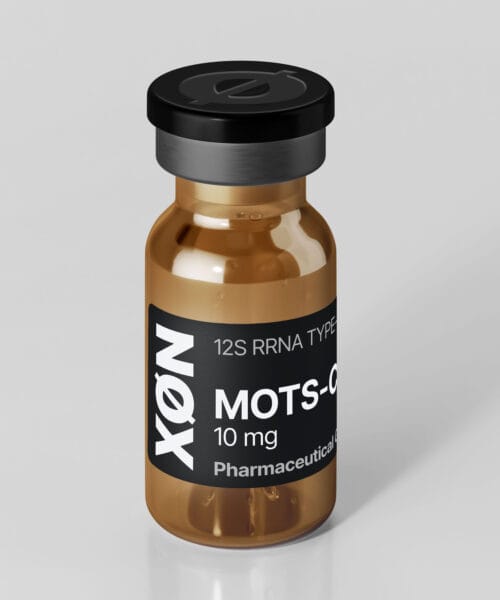
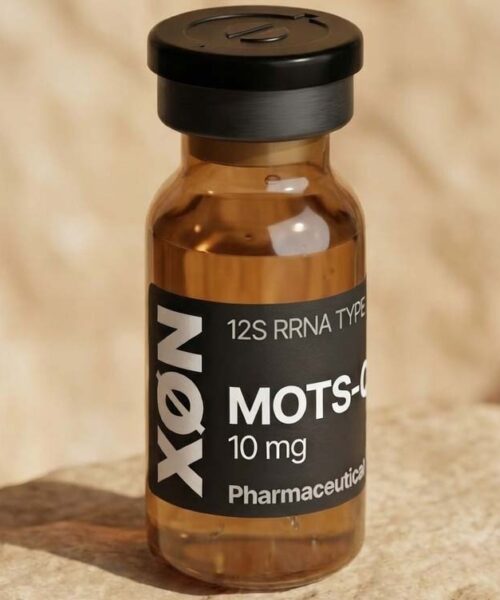
What is MOTS-C?

MOTS-c is a 16-amino acid mitochondrial-derived peptide encoded by the mitochondrial genome. It acts as a mitohormone that regulates metabolic homeostasis, enhances insulin sensitivity, and promotes longevity. MOTS-c operates through the Folate-AICAR-AMPK pathway and can translocate to the nucleus under metabolic stress to regulate gene expression.

Key Benefits

Enhanced insulin sensitivity, improved glucose metabolism, activation of AMPK pathway, mitochondrial function optimization, exercise performance enhancement, and potential longevity benefits.

Mechanism of Action

MOTS-c operates through the Folate-AICAR-AMPK pathway, inhibiting the folate cycle and leading to AMPK activation. Under metabolic stress, it translocates to the nucleus and binds to stress-response transcription factors (NRF2, ATF1/ATF7) to regulate gene expression involved in metabolism, antioxidant response, and cellular stress adaptation.

Pharmacokinetics

Peak: 1 hr Half-life: 4 hr Cleared: ~20 hrs

Research Indications

Insulin Resistance

Improves insulin sensitivity by ~30% in animal studies through AMPK activation. Enhances glucose uptake in skeletal muscle and improves glucose tolerance.

Type 2 Diabetes

Clinical trials show improved glucose homeostasis. Restores metabolic function through enhanced insulin receptor sensitization and AMPK-mediated metabolic regulation.

Obesity Prevention

Prevents obesity despite identical caloric intake in animal models. Promotes fatty acid oxidation and thermogenesis through mitochondrial activation.

Physical Performance

Reverses age-dependent physical decline in animal studies. Improved grip strength, gait parameters, and exercise capacity in aged mice.

Mitochondrial Function

Enhances mitochondrial biogenesis through PGC-1α activation. Improves mitochondrial respiratory capacity and energy production.

Longevity

Late-life treatment showed 6.4% median lifespan extension in mice. Age-related decline of 21% in elderly humans suggests therapeutic potential.

Exercise Capacity

Single dose improved running time by 12% and distance by 15% in mice. Exercise induces 11.9-fold increase in skeletal muscle MOTS-c.

Muscle Homeostasis

Supports muscle health through myostatin reduction and anti-atrophy effects. Positively correlated with muscle strength and power in humans.

Recovery

Promotes mitochondrial biogenesis and reduces inflammatory markers. Enhances metabolic flexibility for improved recovery.

Research Protocols

Disclaimer

These are commonly discussed research protocols and not medical advice. Consult a healthcare provider before use.

GoalDoseFrequencyRoute
Metabolic health 5-10mg Once daily SubQ
Anti-aging protocol 15mg 3x weekly SubQ
Exercise performance 10-15mg Pre-workout SubQ
Conservative start 5mg Once daily SubQ
Low-dose stack protocol 1mg 3x weekly SubQ (abdomen)

Timing

Optimal timing is morning before exercise. Exercise enhances endogenous MOTS-c production by 11.9-fold in muscle tissue. AMPK activation occurs within 30 minutes of administration.

Peptide Interactions

Both activate AMPK pathway - may cause additive hypoglycemic effects. Monitor blood glucose closely.
Complementary mitochondrial enhancement through different pathways. May amplify metabolic and anti-aging benefits.
Different mechanisms allow safe combination with potential synergistic metabolic benefits.
Both are AMPK activators with potential for additive glucose-lowering effects.
Complementary SIRT1/AMPK activation may enhance longevity and metabolic benefits.
Enhanced insulin sensitivity may require dose adjustments to prevent hypoglycemia.

How to Reconstitute

Important

Always use bacteriostatic water (BAC). Sterile technique is essential.

  • 1
    Allow vial to reach room temperature (15-20 minutes)
  • 2
    Calculate required BAC water volume using calculator below
  • 3
    Draw BAC water into syringe
  • 4
    Inject slowly down vial side (not directly onto powder)
  • 5
    Gently swirl until dissolved (never shake vigorously)
  • 6
    Store reconstituted solution at 2-8°C and use within 14 days

Quality Indicators

  • ✓

    White to Off-White Powder

    Lyophilized powder should appear uniform without discoloration, indicating proper storage and purity >95%.

  • ✓

    Clear Solution After Reconstitution

    Should be colorless and clear after reconstitution without particles, cloudiness, or foaming.

  • ✓

    Sequence Verification

    Confirm peptide is MRWQEMGYIFYPRKLR sequence. Request Certificate of Analysis (CoA) showing purity >95% by RP-HPLC.

  • !

    Limited Human Data

    Clinical safety data is limited. Start with conservative doses (5-10mg) and monitor carefully.

  • ✗

    No FDA Approval

    Not FDA-approved for human therapeutic use. Available only as research peptide.

  • ✗

    WADA Banned Substance

    Prohibited by World Anti-Doping Agency as AMPK activator for athletic performance enhancement.

What to Expect

  • Week 1-2: AMPK pathway activation, initial glucose tolerance improvements

  • Week 2-4: Enhanced exercise capacity, improved insulin sensitivity

  • Week 4-8: Sustained metabolic benefits, potential body composition improvements

  • Week 8-12: Maximum mitochondrial function enhancement, metabolic flexibility

  • Side effects: Generally mild, possible injection site reactions

Side Effects & Safety

  • Generally well-tolerated in animal studies with minimal side effects
  • Monitor blood glucose if using diabetes medications - may require dose adjustments
  • Limited long-term human safety data - use with appropriate medical supervision
  • May cause mild injection site reactions (redness, swelling)
  • Not recommended during pregnancy or breastfeeding
  • Prohibited by WADA for competitive athletes (metabolic modulator)
  • Severe allergic reactions or anaphylaxis
  • Recurrent hypoglycemia episodes (<50 mg/dL)
  • Persistent severe injection site reactions
  • Unexplained weight loss >10% of baseline
  • Any concerning symptoms - consult healthcare provider immediately

References

Gestational Diabetes Mellitus (2022)

Mice | Daily administration during pregnancy | Throughout pregnancy | Alleviated hyperglycemia, improved maternal-fetal outcomes

Yin et al. showed MOTS-c significantly alleviated hyperglycemia in GDM mouse model, improved insulin sensitivity, and reduced birth weight abnormalities. Human study found significantly lower serum MOTS-c levels in GDM patients versus controls.

View Study →

Acute Exercise Enhancement (2022)

Mice & Rats | 15 mg/kg single dose i.v. | Acute administration | 12% increased running time, 15% increased distance

Hyatt et al. showed single dose MOTS-c improved running time by 12% and distance by 15% in untrained mice. Chronic training increased MOTS-c protein expression 1.5-5-fold in muscle tissue, demonstrating both acute and chronic exercise-enhancing effects.

View Study →

Exercise Performance and Age-Dependent Physical Decline (2021)

Mice & Humans | 15 mg/kg 3x weekly (mice) | Variable duration | Enhanced physical performance across all age groups

Reynolds et al. demonstrated MOTS-c significantly enhanced physical performance in young, middle-aged, and old mice. Exercise induced 11.9-fold increase in skeletal muscle MOTS-c in humans. Acts as mitochondrial-encoded regulator of age-dependent physical performance.

View Study →

Nuclear Translocation Under Metabolic Stress (2018)

Cell culture & Mice | 1-10 μM in vitro | 30 min-24 hours | Nuclear translocation under stress

Kim et al. demonstrated MOTS-c rapidly translocates to nucleus within 30 minutes of metabolic stress. Once nuclear, it binds to stress-response transcription factors including NRF2 and ATF1/ATF7 to regulate antioxidant and stress-response genes.

View Study →

Coronary Endothelial Dysfunction (2018)

Human patients (n=40) | Observational study | - | Lower MOTS-c levels correlate with endothelial dysfunction

Qin et al. found MOTS-c plasma levels were significantly lower in patients with endothelial dysfunction. Circulating MOTS-c positively correlated with both microvascular and epicardial coronary endothelial function. First human study linking MOTS-c to cardiovascular health.

View Study →

Metabolic Homeostasis and Obesity Prevention (2015)

Mice | 0.5-5 mg/kg/day i.p. | 3-8 weeks | Prevented obesity, improved insulin sensitivity by ~30%

Foundational study by Lee et al. demonstrating MOTS-c prevents obesity in high-fat diet-fed mice despite identical caloric intake. Restored insulin sensitivity in aged mice to levels comparable to young animals through the folate-AICAR-AMPK pathway.

View Study →