Overview

What is Ovagen ?

Ovagen is a synthetic tripeptide with the sequence Glu-Asp-Leu (EDL), developed by Vladimir Kh. Khavinson and colleagues at the St. Petersburg Institute of Bioregulation and Gerontology. The compound is sold in Russia as a biologically active food supplement (BAFS) under the Cytogen / Garmonia commercial line. IMPORTANT framing: despite frequent marketing as a hepatoprotective or gastrointestinal bioregulator, every PubMed-indexed primary research paper on EDL studies kidney endpoints, not liver. The Khavinson-group publications document EDL effects on rat renal cell culture senescence markers (p16, p21, p53, SIRT-6), MMP-14 gene expression in kidney cells, and protective effects in rat models of cisplatin nephrotoxicity, gentamicin nephropathy, and ischemia-reperfusion kidney injury. The hepatoprotection claim circulating in commercial channels rests on a single table entry in a 2021 Khavinson review (PMID 34834147) citing a 2005 monograph (Khavinson and Malinin, Karger), not a primary experimental paper. The Khavinson liver tetrapeptide work is on KEDA (Livagen), a different compound. Six PubMed-indexed primary research papers on EDL exist, all rat or in vitro studies, all from the Khavinson network. No human clinical trial, no human pharmacokinetic data, no FDA or EMA registration, no Russian pharmaceutical drug registration verified for the synthetic tripeptide.

Key Benefits

Proposed renal bioregulator with rat-model nephroprotection in cisplatin, gentamicin, and ischemia-reperfusion injury

Mechanism of Action

Synthetic tripeptide Glu-Asp-Leu. Biophysical evidence shows minor-groove DNA binding at the ctcc motif. In rat kidney cell culture, EDL reduces senescence markers p16, p21, and p53, increases SIRT-6, and specifically activates MMP-14 gene expression. In rat in vivo models, EDL normalizes diuresis, creatinine, glomerular filtration rate, and antioxidant enzyme activity after acute renal injury. The mechanism of membrane penetration is acknowledged as unclear by the source authors. No molecular receptor target identified at structural resolution.

Pharmacokinetics

Peak: 2 min Half-life: 15 min Cleared: ~1.3 hrs

Research Indications

Cisplatin Nephrotoxicity (rat)

Normalization of diuresis, creatinine, GFR, and sodium handling in rat cisplatin AKI model.

Gentamicin Nephropathy and Ischemia-Reperfusion (rat)

Prevention of oliguria and azotemia, decreased proteinuria, improved antioxidant enzyme activity.

Renal Cell Senescence (in vitro, rat)

Reduction of p16, p21, p53 and increase of SIRT-6 in primary kidney cells from aged rats.

Aged Rat Kidney Function (in vivo)

Diuresis increased 1.2-1.4 fold in aged rats; antioxidant enzymes stimulated without nephrotoxicity.

Peptide Interactions

Livagen (Lys-Glu-Asp-Ala) is the Khavinson tetrapeptide with the actual hepatoprotection data and the EP1325026 patent. Ovagen (Glu-Asp-Leu) is a different compound studied in renal models. They are routinely confused because of overlapping commercial framing as liver peptides. For liver bioregulation, Livagen is the studied compound.
Pinealon and Ovagen are short Khavinson bioregulators with different tissue targets (pineal vs renal). No documented interaction. Used together in Khavinson protocol frameworks.
Different tissue targets (Cartalax = cartilage; Ovagen = kidney). No documented interaction.
EDL has documented protective effects against cisplatin and gentamicin nephrotoxicity in rat models (PMIDs 26515176, 28744634). Whether this translates to clinical drug-induced renal injury protection in humans is unstudied. Do not rely on Ovagen for nephroprotection in real oncology or aminoglycoside therapy.
EDL increased diuresis 1.2-1.4 fold in aged rats (PMID 30607912). Theoretical additive effect with loop or thiazide diuretics. Not studied in humans.
No published interaction data. Mechanism is local epigenetic regulation of renal cell gene expression. Not characterized in transplant or autoimmune settings.
Ovagen is commercially marketed as hepatoprotective, but no primary experimental research supports the claim. Do not use as protection against acetaminophen, statins, methotrexate, or other hepatotoxic agents.

How to Reconstitute

Important

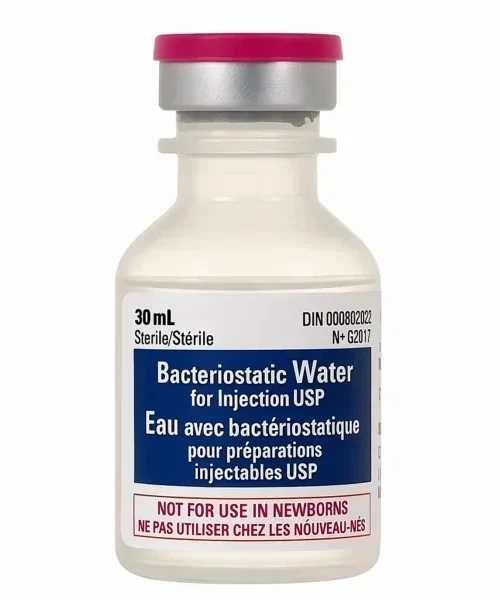
Ovagen is sold in Russia primarily as an oral capsule BAFS supplement. Research-grade lyophilized powder for reconstitution is available from third-party suppliers; reconstitute with 0.9% sterile sodium chloride or bacteriostatic water immediately before use. No human pharmacokinetic study has been published. Store lyophilized vials at 2-8°C.

  • 1
    Store lyophilized vial at 2-8°C until use
  • 2
    Allow vial to reach room temperature for 5-10 minutes
  • 3
    Add solvent slowly down the vial wall; do not shake
  • 4
    Gently swirl until fully dissolved (solution should be clear)
  • 5
    No published human dosing protocol exists; reconstitution volume is operator-dependent
  • 6
    Use reconstituted solution within 7-10 days; store at 2-8°C between uses

Quality Indicators

  • ✓

    White lyophilized powder

    Legitimate research-grade Ovagen appears as a white to off-white lyophilized powder.

  • ✓

    Sealed vial with batch and expiry

    Inspect the seal, batch number, and expiry date. Vials without batch documentation should not be used.

  • ✓

    Clear reconstituted solution

    Reconstituted Ovagen should be completely clear and colorless.

  • !

    Verify sequence is EDL (Glu-Asp-Leu)

    The Khavinson short-peptide family contains many similar 3- and 4-residue sequences. Demand a COA that specifies Glu-Asp-Leu. CAS numbers in vendor channels are conflicting; PubChem CID 444128 is the reliable chemical identifier.

  • !

    Disambiguate from other Russian products named Ovagen

    A separate Russian small-molecule product is sometimes also called Ovagen in hepatology contexts and is unrelated to the Khavinson peptide. Confirm you are sourcing the EDL tripeptide.

  • X

    Cloudy, yellow, or particulate solution

    Discard. Indicates degradation, contamination, or incorrect reconstitution.

What to Expect

  • No published human pharmacokinetic data and no published human efficacy timeline.

  • Rat in vivo renal endpoints assessed over days to weeks of dosing.

  • In vitro senescence-marker shifts in renal cell culture observed within 3-7 days.

  • All efficacy claims are renal; no primary experimental data for liver or GI indications.

Side Effects & Safety

  • No dedicated safety, tolerability, or adverse event studies have been published for EDL in any peer-reviewed source.
  • Class inference: closely related Khavinson short peptides have been tested at high multiples of nominal dose in animals without observed toxicity, but this class-level inference is not formal safety data for EDL.
  • Contraindications, drug interactions, and special-population data are not characterized.
  • Commercial framing as hepatoprotective or GI bioregulator is not supported by primary experimental literature; do not rely on Ovagen for hepatic or GI risk mitigation.
  • Not FDA approved, not EMA approved, no verified Russian pharmaceutical drug registration.
  • Signs of allergic reaction or hypersensitivity
  • Unusual urinary symptoms (changes in volume, color, or pain)
  • Injection site reactions beyond mild transient redness
  • Any unexpected systemic symptoms

References

Nephroprotective EDL in Acute Kidney Injury (Bull Exp Biol Med, 2017)

Rat | EDL injection | Gentamicin + I/R models

EDL demonstrated nephroprotective effects in rat models of gentamicin-induced nephropathy and renal ischemia-reperfusion injury. Outcomes included prevention of oliguria and azotemia, decreased proteinuria, improved antioxidant enzyme activity, suppression of lipid peroxidation, and normalized renal energy metabolism.

View Study →

EDL in Cisplatin Acute Renal Failure (Bull Exp Biol Med, 2015)

Rat | Cisplatin model | Functional renal endpoints

EDL produced a potent nephroprotective effect in rats with cisplatin-induced acute renal failure, normalizing diuresis, creatinine, glomerular filtration rate, and sodium resorption, and reducing proteinuria. AED, EDL, and AEDG were tested in parallel.

View Study →

Renal Cell Culture Aging (Adv Gerontol, 2014)

Rat | Primary kidney cell culture | Senescence markers

EDL treatment of primary kidney cell cultures from aged Wistar rats increased proliferation and reduced expression of senescence markers p16, p21, and p53. SIRT-6 was increased. Authors propose EDL binds DNA in the minor groove to modify gene expression encoding aging markers.

View Study →

Signaling Molecule Regulation in Aging Kidney Cells (Bull Exp Biol Med, 2014)

Rat | Kidney cell culture | Polypeptide complex + AED + EDL

Polypeptide kidney complex and synthetic peptides AED (T-31) and EDL (T-35) were tested in primary rat kidney cell cultures. EDL specifically activated MMP-14 (gelatinase) expression. The complex and AED activated cell renewal processes.

View Study →

DNA Binding by Short Peptides (Bull Exp Biol Med, 2016)

Biophysical | 19 short Khavinson peptides

Examined DNA-binding preferences of 19 short Khavinson peptides. EDL and AEDL bind the ctcc DNA motif. Authors propose one short peptide can regulate dozens of genes, while acknowledging that the molecular mechanism of cell membrane penetration is unclear.

View Study →

Peptide Bioregulators in Aged Rat Kidneys (Adv Gerontol, 2018)

Rat | Aged | Multiple peptides including EDL

Polypeptide kidney complex, AED, EDL, and AEDG administered to aged rats. EDL increased diuresis 1.2-1.4 fold. All compounds stimulated antioxidant enzymes without nephrotoxic effects. Authors conclude these compounds may be considered as nephroprotective agents in kidney aging.

View Study →