Thymalin

Overview

What is Thymalin?

Thymalin is a polypeptide complex extracted from calf thymus gland, developed by V.G. Morozov and V.Kh. Khavinson at the St. Petersburg Institute of Bioregulation and Gerontology in the 1970s and registered as a pharmaceutical in Russia since 1982 (Samson-Med, Roszdravnadzor LS-000267). Unlike Thymulin (FTS, a single zinc-dependent nonapeptide), Thymalin is a multi-component mixture with characterized active fragments including the EW dipeptide (Glu-Trp, marketed separately as Thymogen), KE (Lys-Glu, marketed as Vilon), and EDP (Glu-Asp-Pro, marketed as Crystagen). The complex acts as a thymic bioregulator: it accelerates T-lymphocyte maturation from CD117+ hematopoietic progenitors, restores B and T lymphocyte ratios, and modulates pro-inflammatory cytokines (TNF-alpha, IL-6, IL-1beta) via epigenetic gene regulation. Clinical use in Russia covers immunodeficiency states, post-radiotherapy and post-chemotherapy immune recovery, bronchial asthma, and impaired tissue regeneration. A small open-label RCT (n=92) in 2021 reported reduced inflammatory markers in hospitalized COVID-19 patients, and a 6-8 year observational geroprotective study (n=266) reported reduced all-cause mortality in elderly subjects. Nearly all clinical evidence originates from the Khavinson research group, and no independent Western replication has been published.

Key Benefits

Immune reconstitution, T-cell maturation from progenitors, modulation of pro-inflammatory cytokines, supportive use during/after immunosuppressive therapy

Mechanism of Action

Accelerates differentiation of CD117+ hematopoietic progenitors into mature CD28+ T-lymphocytes. Constituent EW and KE dipeptides bind specific DNA motifs (GGAG and GCGC respectively) and act as epigenetic modulators of cytokine gene expression. Downstream effects include reduced TNF-alpha, IL-6, and IL-1beta, restored CD4+/CD8+ ratios, and increased phagocytic activity.

Pharmacokinetics

Peak: 3 min Half-life: 30 min Cleared: ~2.5 hrs

Research Indications

Age-Related Immune Decline

Approved Russian indication for immunodeficiency in elderly populations. Linked to the 6-8 year geroprotective trial showing reduced respiratory infection incidence.

Post-Chemotherapy / Radiotherapy Recovery

Approved Russian indication. Used as immune support during oncology treatment to mitigate treatment-induced lymphopenia.

T-Cell Maturation

In vitro evidence in human HSCs: 2-3-fold reduction in CD117 (progenitor marker) and 6.8-fold increase in CD28 (mature T-cell marker).

Cytokine Suppression

Reduces TNF-alpha, IL-6, and IL-1beta in human PBMCs (in vitro) and in COVID-19 RCT patients (in vivo).

COVID-19 Adjunct (Investigational)

Open-label RCT (n=92) reported 5.5-fold lower IL-6, 5.7-fold lower D-dimer, 9.7-fold lower CRP versus standard care. Single-center, not replicated.

Geroprotection

Khavinson 2003 longevity trial: annual cycles in elderly reportedly reduced all-cause mortality 2.0-2.5-fold (Thymalin alone) over 6 years. Effect size implausibly large; treat as preliminary.

Thymic Involution Support

Mechanistic rationale: aging thymus produces fewer naive T-cells. Thymalin’s pro-maturation effect is the proposed countermeasure.

Post-Infection Recovery

Russian label indication: viral and bacterial infections. Used as part of post-infectious immune restoration protocols.

Tissue Regeneration

Russian label indication for impaired bone and soft tissue regeneration. Mechanism unclear; possibly downstream of cytokine modulation.

Research Protocols

Disclaimer

Thymalin is a 40-year-old Russian pharmaceutical with a real regulatory history, real clinical use, and a credible (if narrow) PubMed evidence base. The practical caveats are that nearly all evidence comes from one research group, the trials are open-label and single-center, and the product is a multi-peptide extract rather than a defined single peptide. Source quality matters more than for synthetic peptides. For Western users without prescription access, the realistic informational use case is understanding the literature, not implementing the Russian label. This is educational research information, not medical advice, and not a substitute for guidance from a qualified healthcare provider.

Goal Dose Frequency Route
Russian Label (Adult Immunodeficiency) 5-20 mg Once daily for 3-10 days (total course 30-100 mg) IM
COVID-19 RCT Protocol 10 mg Once daily for 10 days IM
Geroprotective (Annual Cycle) Standard 5-10 mg/day course Once daily for 5-10 days, repeated annually IM
Pediatric (Russian Label, 7-14 yr) 3-5 mg Once daily for 3-10 days IM

Timing

Daily IM injection during the course. No published PK on the complex because it is a multi-peptide mixture.

Peptide Interactions

Thymalin and Thymulin are frequently confused but are different compounds. Thymulin is a single 9-amino-acid zinc-dependent metallopeptide (FTS). Thymalin is a multi-peptide thymic extract containing EW, KE, EDP and other fragments. They share the thymic bioregulator class but have different mechanisms and dosing. Verify the product label before use.
The original Khavinson geroprotective protocols pair Thymalin (thymic axis) with Epitalon or Epithalamin (pineal axis). The 6-8 year longevity trial in elderly subjects used annual courses of both, and reported larger mortality reductions for the combination than for either alone.
Both target thymic-axis immunity but via different mechanisms. Thymosin Alpha-1 is a single synthetic 28-amino-acid peptide acting on TLR signaling. Thymalin is a multi-peptide extract acting partly via epigenetic regulation through KE and EW dipeptide constituents. No direct comparison studies, but mechanisms appear complementary.
Thymogen (Glu-Trp / EW dipeptide) is one of Thymalin's identified active constituents, now manufactured as a standalone synthetic peptide. Co-administration is redundant rather than synergistic: anyone using Thymalin is already receiving EW activity. Stacking risks unnecessary duplication of effect.
Both are Khavinson-developed bioregulators targeting different tissue axes (Pinealon = pineal/neuroprotective tripeptide; Thymalin = thymic/immune). Used together in Russian gerontology protocols. No published interaction data.
Chronic corticosteroid therapy suppresses thymic function. Thymalin's clinical rationale partly involves reversing this suppression. No formal interaction studies; theoretical interest as a steroid-sparing adjunct in autoimmune protocols, but no clinical data supports unsupervised co-use.
Thymalin's mechanism (accelerating T-cell maturation, increasing CD4+/CD28+ populations) is directionally opposite to post-transplant immunosuppression. Use in solid organ or bone marrow transplant recipients has not been studied and is theoretically contraindicated.
Approved indication on the Russian label includes immune recovery after chemotherapy and radiotherapy. Cochrane class-level review of thymic peptides in cancer (PMID 21328265, not Thymalin-specific) showed reduced severe infection risk without survival benefit. Coordinate with the treating oncologist before combining.

How to Reconstitute

Important

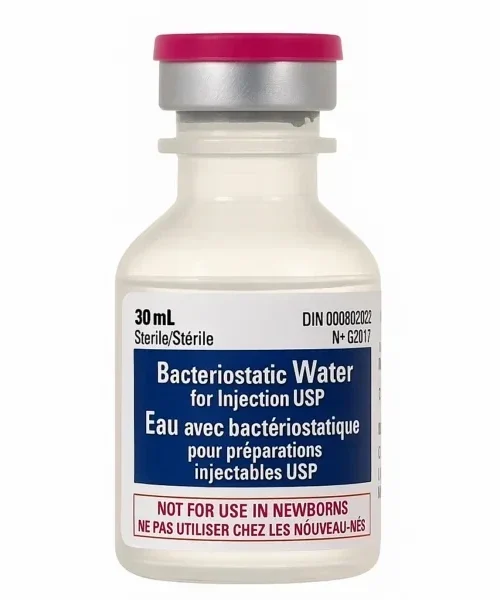
Lyophilized powder, typically 10 mg per vial. Reconstitute with 1-2 mL of 0.9% sterile sodium chloride (preferred over BAC water per Russian label) immediately before use. Use the full reconstituted volume in a single intramuscular injection. Store lyophilized vials at 2-8°C. Do not store reconstituted solution.

  • 1
    Store lyophilized vials at 2-8°C until use
  • 2
    Allow vial to reach room temperature for 5-10 minutes
  • 3
    Reconstitute with 1-2 mL of 0.9% sodium chloride immediately before injection
  • 4
    Add solvent slowly down the vial wall; do not shake
  • 5
    Gently swirl until fully dissolved (solution should be clear)
  • 6
    Draw the full reconstituted volume into a single syringe
  • 7
    Inject IM into deltoid, vastus lateralis, or gluteal muscle
  • 8
    Do not store reconstituted product; use the same day

Quality Indicators

  • White lyophilized powder

    Legitimate Thymalin appears as a white to off-white lyophilized powder. Discoloration, browning, or visible moisture indicates degradation.

  • Sealed vial with Samson-Med label

    Original Russian product carries Samson-Med branding, batch number, expiry date, and Roszdravnadzor registration LS-000267. Inspect seals and labeling for tampering.

  • Clear reconstituted solution

    Reconstituted Thymalin should be completely clear and colorless. Cloudiness, particulates, or precipitate after gentle swirling indicate impurity or degradation.

  • Refrigerated cold chain

    Lyophilized vials require 2-8°C storage. Verify the product has not been exposed to freezing or room temperature shipping without cold packs.

  • !

    Verify product is Thymalin, not Thymulin

    Vendors sometimes mislabel or confuse the two. Confirm the vial label, COA, and product page specifically say Thymalin (polypeptide complex), not Thymulin (FTS nonapeptide).

  • !

    Batch variability for an extract

    Thymalin is a multi-peptide extract rather than a defined single peptide. Batch-to-batch consistency from non-Samson-Med sources cannot be assumed. Prefer pharmacy-channel material with batch documentation.

  • !

    Reconstitute with sterile saline, not BAC water

    The Russian label specifies 0.9% sodium chloride. Use the labeled solvent and inject the full volume the same session; do not store reconstituted product.

  • X

    Cloudy, yellow, or particulate solution

    Discard. Indicates degradation, contamination, or incorrect reconstitution.

What to Expect

  • Day 1-3: No immediately perceptible effects expected

  • Day 7-10: In the COVID-19 RCT, lymphocyte and CD4+ counts increased and IL-6 / CRP / D-dimer decreased over this window

  • Single course: Effects on infection rates and immune markers reported over weeks to months

  • Geroprotective use: Outcomes assessed over multiple annual cycles, not single courses

  • Source quality matters: a multi-peptide extract is more batch-dependent than a synthetic peptide

Side Effects & Safety

  • Russian label contraindications: known hypersensitivity to thymic proteins, pregnancy, lactation
  • No widely reported organ-specific toxicity in published clinical use
  • AE reporting in published trials does not meet modern ICH/CTCAE standards; absence of reported events is not equivalent to demonstrated safety
  • Not studied in solid organ or bone marrow transplant recipients on immunosuppression
  • Not studied in active autoimmune disease; theoretical concern with pro-T-cell mechanism
  • Not FDA-approved or EMA-approved
  • Use during oncology treatment should be coordinated with the treating oncologist
  • Signs of hypersensitivity (rash, urticaria, swelling, anaphylactic symptoms)
  • Injection site reaction beyond mild transient redness
  • Autoimmune flare in patients with pre-existing autoimmune disease
  • Any unexpected systemic symptoms requiring medical evaluation

References

Thymalin in Complex Therapy for Patients with COVID-19 (Open-Label RCT, 2021)

Human | n=92 | 10 mg/day IM x 10 days | Single-center, open-label

Randomized controlled trial in 42 Thymalin-treated and 50 control COVID-19 patients at St. Petersburg City General Hospital No. 2. Thymalin arm showed lymphocytes +55%, T-lymphocytes +63.8%, CD4+ cells +88.9%, IL-6 reduced 5.5-fold, D-dimer reduced 5.7-fold, CRP reduced 9.7-fold versus standard care. Open-label design and single-center conduct limit interpretation; effect sizes warrant independent replication.

View Study →

Peptides of Pineal Gland and Thymus Prolong Human Life (2003)

Human | n=266 elderly | 6-8 year follow-up | Open-label observational

Longitudinal study of elderly subjects receiving annual courses of Thymalin (alone or with Epithalamin) versus untreated controls. Reported 2.0-2.5-fold reduction in all-cause mortality for Thymalin alone and 4.1-fold for the combined regimen over 6 years, plus 2.0-2.4-fold reduction in acute respiratory infections. Effect sizes are implausibly large by modern standards. No blinding, no pre-specified endpoint adjudication.

View Study →

Thymalin: Activation of Differentiation of Human Hematopoietic Stem Cells (2020)

Human HSCs | In vitro | Bull. Exp. Biol. Med.

Demonstrated the cellular mechanism: Thymalin reduced CD44 and CD117 (stem/progenitor markers) by 2-3-fold and increased CD28 (mature T-cell marker) by 6.8-fold in cultured human hematopoietic stem cells. Supports the clinical hypothesis that Thymalin accelerates maturation of CD117+ progenitors into functional T-lymphocytes.

View Study →

Influence of KE and EW Dipeptides on COVID-19-Related Gene Expression (IJMS, 2023)

Human PBMCs | LPS-stimulated | Molecular docking + in vitro

Identified 24 COVID-19-associated gene targets of the KE and EW dipeptide components. In LPS-stimulated peripheral blood mononuclear cells, individual KE and EW peptides reduced TNF-alpha synthesis 5-6-fold; the whole Thymalin complex reduced it 2.2-fold. Docking studies showed EW binds GGAG and KE binds GCGC DNA motifs, supporting an epigenetic mechanism.

View Study →

Peptides Regulating Proliferative Activity in Monocyte/Macrophage THP-1 Cells (IJMS, 2022)

Human THP-1 macrophages | In vitro | Joint Italian-Russian

Thymalin increased tyrosine phosphorylation of mitogen-activated kinases and reduced TNF and IL-6 production in LPS-stimulated differentiated macrophages. Also reduced monocyte adhesion to activated endothelium. Notable as one of the few collaborations between Western and Russian groups on this compound.

View Study →

The Use of Thymalin for Immunocorrection and Molecular Aspects of Biological Activity (2021)

Narrative review | Biology Bulletin Reviews

Review by the principal research group summarizing 40+ years of Thymalin data. Catalogs identified active fragments (EW, KE, EDP), epigenetic mechanism (DNA/histone binding), and clinical evidence in elderly immunity, respiratory infections, and COVID-19. Useful as a single-source overview, though limited by group affiliation.

View Study →