Vesugen

Overview

What is Vesugen?

Vesugen (also spelled Vezugen in some Khavinson-group publications) is a synthetic tripeptide with the sequence Lys-Glu-Asp (KED), developed by Vladimir Kh. Khavinson and colleagues at the Saint Petersburg Institute of Bioregulation and Gerontology. It is proposed as a vascular bioregulator and is marketed in Russia as a biologically active food supplement (BAFS), not as a registered pharmaceutical drug. The published evidence base consists of approximately 15 PubMed-indexed papers, predominantly in vitro cell culture and rodent work, with two small uncontrolled human observational studies in elderly populations (vasculogenic erectile dysfunction, n=41, PMID 25051774; biological aging markers, n=32, PMID 26390612). Proposed mechanisms include normalization of endothelin-1 in cultured vascular cells, restoration of connexin gap-junction expression, upregulation of SIRT1, epigenetic activation of the MKI67 (Ki-67) promoter in aged endothelium, and reduction of E-selectin on vascular endothelium. A 2021 mouse Alzheimer-disease study (PMID 34071923, Pharmaceuticals) reported preservation of mushroom-type dendritic spines at 400 mcg/kg IP daily for 2 months; that paper received a published correction in January 2025 (PMID 39861198) and findings should be cited with that notice. Almost all data originates from the Khavinson research network. No independent Western randomized controlled trial has been published. No pharmacokinetic study has been published.

Key Benefits

Vascular endothelial bioregulator with proposed Ki-67 / SIRT1 / connexin effects in cultured cells and animal models

Mechanism of Action

Synthetic tripeptide Lys-Glu-Asp. Proposed mechanism is epigenetic regulation at the chromatin level: molecular docking shows interaction with the MKI67 (Ki-67) gene promoter in aged endothelial cells, normalization of endothelin-1 in atherosclerosis models, upregulation of SIRT1, reduction of E-selectin, and decrease of senescence markers p16 and p21 in stem cell systems. No receptor target has been identified at molecular resolution. No human pharmacokinetic data has been published.

Pharmacokinetics

Peak: 2 min Half-life: 15 min Cleared: ~1.3 hrs

Research Indications

Vascular Endothelial Aging (preclinical)

Ki-67 stimulation and senescence-marker reduction in cultured aged endothelial cells. No human outcome data.

Atherosclerosis Models (preclinical)

E-selectin reduction and SIRT1 upregulation in vascular cell cultures and rat models. No human RCT.

Lower-Limb Arterial Insufficiency (uncontrolled human)

41-patient uncontrolled study reported improved arterial blood flow. No control arm, no randomization, no blinding (PMID 25051774).

Stem Cell Senescence (preclinical)

p16 and p21 reduction in human periodontal ligament and gingival mesenchymal stem cells in vitro.

Biological Aging Markers (uncontrolled human)

32-patient observational study in elderly polymorbidity reported greater anti-aging biomarker shifts with Vesugen than with Pinealon. No control, no blinding (PMID 26390612).

5xFAD Alzheimer Mouse Model (preclinical, with correction)

400 mcg/kg IP daily for 2 months preserved CA1 mushroom dendritic spines. Source paper has a 2025 published correction; cite with notice.

Neuronal Differentiation (preclinical)

0.01 mcg/mL in culture medium of human periodontal ligament stem cells increased GAP43 and Nestin expression.

Research Protocols

Disclaimer

Vesugen has a real chemical identity (PubChem CID 87571363), a 15-paper PubMed footprint, and proposed vascular bioregulatory activity, but no randomized controlled trial has been conducted and no human pharmacokinetic data exists. The two published human studies are small, uncontrolled, single-center, and Russian-language. The Khavinson research network is the source of nearly all data; no fully independent Western replication has been published. This is educational research information, not medical advice, and not a substitute for guidance from a qualified healthcare provider.

Goal Dose Frequency Route
Mouse 5xFAD Alzheimer Model (PMID 34071923) 400 mcg/kg Once daily for 2 months IP (mouse)

Timing

No published Cmax / Tmax / half-life data for the Vesugen tripeptide in any species.

Peptide Interactions

Both are Khavinson-developed bioregulators targeting different tissue axes (Epitalon = pineal/telomerase; Vesugen = vascular). Co-administration is part of the Khavinson gerontology protocol framework, though no peer-reviewed interaction study has been published.
Pinealon (Glu-Asp-Arg) and Vesugen are commonly stacked in Khavinson short-peptide protocols targeting neurovascular aging. The 2015 elderly polymorbidity observational study (PMID 26390612) used Vesugen and Pinealon together but reported Vesugen as the stronger anti-aging signal.
Different tissue targets (Cartalax = cartilage/connective tissue; Vesugen = vascular endothelium). Both are short Khavinson bioregulators with overlapping epigenetic mechanisms but no documented interaction.
Both target cardiovascular tissues via different mechanisms (Cardiogen acts on cardiomyocyte apoptosis; Vesugen acts on endothelial proliferation). No published interaction data, theoretically complementary.
Vesugen modulates endothelin-1 and vascular tone markers in vitro. Theoretical interaction with calcium channel blockers, ACE inhibitors, ARBs, and PDE5 inhibitors has not been studied. Patients on antihypertensive therapy should consult a physician before use.
No published interaction data with warfarin, DOACs, or antiplatelet drugs. The vascular endothelial mechanism is theoretically downstream of coagulation, but interaction has not been formally studied.
No published data. Mechanism is local epigenetic regulation of vascular endothelial genes, not systemic immunomodulation, so interaction is theoretically minimal but not characterized.
Vilon (Lys-Glu) is a Khavinson dipeptide that shares two of the three amino acids in Vesugen and overlapping epigenetic effects. Co-administration is redundant rather than complementary based on the published mechanistic overlap.

How to Reconstitute

Important

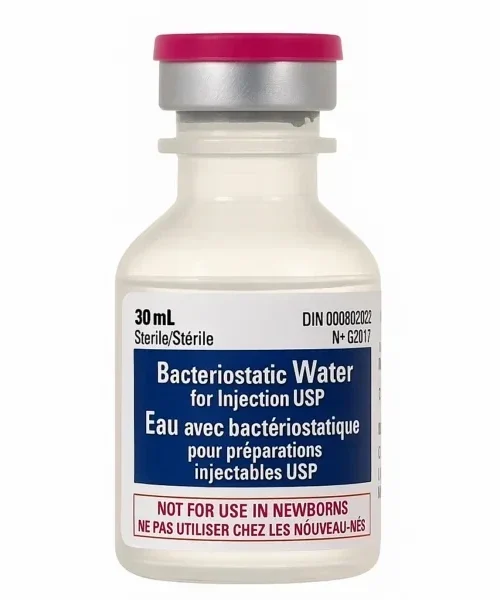
Vesugen is supplied as a lyophilized powder. Reconstitute with 0.9% sterile sodium chloride or bacteriostatic water immediately before use. No human pharmacokinetic study has been published; storage and use guidance below mirror conventions for related Khavinson short peptides. Store lyophilized vials at 2-8°C.

  • 1
    Store lyophilized vial at 2-8°C until use
  • 2
    Allow vial to reach room temperature for 5-10 minutes
  • 3
    Add solvent slowly down the vial wall; do not shake
  • 4
    Gently swirl until fully dissolved (solution should be clear)
  • 5
    Reconstitution volume is operator-dependent because no human dose has been published; common community practice is 1-2 mL per 10 mg vial
  • 6
    Use reconstituted solution within 7-10 days; store at 2-8°C between uses

Quality Indicators

  • White lyophilized powder

    Legitimate Vesugen appears as a white to off-white lyophilized powder. Discoloration, browning, or visible moisture indicates degradation.

  • Sealed vial with batch and expiry

    Inspect the seal, batch number, and expiry date. Vials without batch documentation should not be used.

  • Clear reconstituted solution

    Reconstituted Vesugen should be completely clear and colorless after gentle swirling.

  • Refrigerated cold chain

    Lyophilized vials require 2-8°C storage. Verify cold-pack shipping for any vendor purchase.

  • !

    Verify sequence is KED

    The Khavinson short-peptide family contains many similar tripeptides. Confirm the COA specifies Lys-Glu-Asp (KED), not KE (Vilon), KEDA (Livagen), or EDL (Ovagen).

  • !

    Research-grade only

    Vesugen is sold as a research compound or Russian dietary supplement, not as a pharmaceutical-grade drug. Third-party identity testing is reasonable.

  • X

    Cloudy, yellow, or particulate solution

    Discard. Indicates degradation, contamination, or incorrect reconstitution.

What to Expect

  • No published human pharmacokinetic data and no published efficacy timeline.

  • Animal endpoints in the 2021 Alzheimer mouse model were assessed after 2 months of daily IP dosing.

  • In vitro mechanistic effects (Ki-67, p21, FOXO1, GAP43) occur within 3-7 days of medium exposure.

  • Biological aging marker shifts in the 32-patient observational study were assessed after a single Khavinson protocol course.

Side Effects & Safety

  • No structured Phase I safety study has been published. The two small Russian clinical studies (n=41 ED, PMID 25051774; n=32 polymorbidity, PMID 26390612) reported no adverse events but did not use formal AE reporting protocols, so absence of reported events is not evidence of safety.
  • Contraindications and drug interactions have not been formally studied. Treat the antihypertensive, anticoagulant, and PDE5-inhibitor monitor-combination interactions on this page as directional logic, not validated data.
  • Pregnancy, lactation, renal or hepatic impairment, and pediatric use have not been studied; default to non-use in these populations.
  • The 2021 Pharmaceuticals mouse paper (PMID 34071923) has a published correction (PMID 39861198, January 2025); the corrected content is not specified in the public correction abstract, which means the mouse Alzheimer findings should be cited with the correction notice.
  • Sold in Russia as a BAFS dietary supplement, not as a registered pharmaceutical. Not FDA approved, no EMA marketing authorization, no ClinicalTrials.gov-registered studies.
  • Signs of allergic reaction or hypersensitivity
  • Unusual cardiovascular symptoms (palpitations, chest pain, syncope)
  • Injection site reactions beyond mild transient redness
  • Any unexpected systemic symptoms

References

KED in 5xFAD Mouse Alzheimer Model (Pharmaceuticals, 2021)

Mouse | 400 mcg/kg IP daily | 2 months | 5xFAD transgenic

KED restored hippocampal CA1 mushroom-type dendritic spine density toward control levels and showed a trend toward improved long-term potentiation. Effects were more pronounced in males. Molecular docking confirmed KED interaction with promoter regions of CASP3, MAPT, and PSEN1 genes. IMPORTANT: This paper has a published correction (PMID 39861198, January 2025); cite with correction notice.

View Study →

Vasoprotective KED in Atherosclerosis Models (Adv Gerontol, 2016)

In vitro | Cultured vascular cells | Russian-language

KED normalized elevated endothelin-1 expression, restored connexin gap-junction expression, and upregulated SIRT1 in cultured vascular endothelial and smooth muscle cells exposed to atherosclerosis and restenosis conditions. Single-laboratory finding without independent replication.

View Study →

Anti-Atherosclerotic Effects of Short Peptides (Bull Exp Biol Med, 2014)

Wistar rat + in vitro | KED among peptides tested

KED reduced E-selectin expression, increased Ki-67, and decreased p53 in vascular cell cultures and Wistar rat models. E-selectin reduction is implicated in reduced monocyte recruitment to atherosclerotic plaques.

View Study →

Epigenetic Regulation of Endothelial Aging (Adv Gerontol, 2014)

In vitro + molecular docking | Aged endothelial cells

Vesugen stimulated Ki-67 expression in aged vascular endothelial cell cultures. Molecular docking showed Vesugen contacts the core promoter of the MKI67 gene, supporting an epigenetic mechanism at the chromatin level.

View Study →

Vezugen in Lower-Limb Arterial Insufficiency (Adv Gerontol, 2014)

Human | n=41 | Uncontrolled | Russian-language

Uncontrolled clinical study in 41 patients with vasculogenic erectile dysfunction from atherosclerosis. Vezugen monotherapy improved penile arterial blood flow by clinical and Doppler measures. Specific dose, route, and cycle duration not reported in the English-language abstract. No control arm, no randomization, no blinding.

View Study →

Stem Cell Senescence Reversal (Stem Cell Rev Rep, 2020)

In vitro | Human PDLSC and GMSC | Italian-Russian

KED reduced p16 and p21 mRNA expression by 1.82-3.23-fold versus controls in human periodontal ligament and gingival mesenchymal stem cells, confirming antisenescent activity. One of two papers involving partial collaboration with the Italian group at University G. d'Annunzio Chieti-Pescara.

View Study →