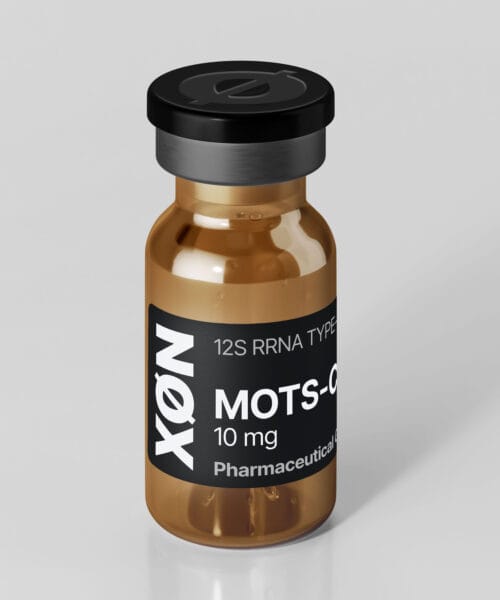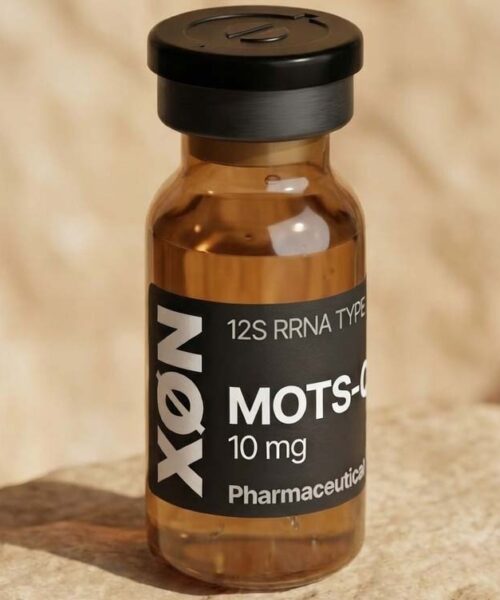


Human growth hormone has established medical uses, but understanding its benefits starts with knowing which product, condition, and evidence you are discussing. Prescription somatropin used to treat a diagnosed hormone deficiency is different from a research product advertised online, and different again from a peptide designed to stimulate growth hormone release.
If you searched for “human growth hormone peptides buy,” you may be comparing benefits, Canadian availability, prices, or testing standards. Each deserves a clear answer before a purchase decision. A useful guide should explain the science and show how to assess the information behind a supplier’s claims.
For Canadians considering NOX Peptides for legitimate research procurement, its visible pricing, posted laboratory summaries, report links, and stated shipping terms provide concrete starting points. This article examines those features alongside the evidence for human growth hormone, including what clinical research can and cannot establish about an online product.
The medical benefits discussed below relate to appropriately prescribed treatment in suitable patients. They are not evidence that NOX products are authorized medicines or suitable for personal use. Canadians seeking hormone treatment should work with a qualified clinician and a licensed pharmacy.
What human growth hormone does
Human growth hormone, usually abbreviated HGH or GH, is a hormone produced by the pituitary gland. It contributes to growth and influences the way the body handles nutrients and maintains tissues. Its effects involve direct signalling and the production of insulin-like growth factor 1, commonly called IGF-1.
Somatropin is a manufactured form of human growth hormone. The principal human GH molecule and recombinant somatropin contain 191 amino acids, making this a relatively large polypeptide hormone. Calling HGH a peptide is reasonable, but the label alone tells you little about a product’s formulation, authorization, or intended use.
Those distinctions matter when reading online descriptions. Two products can appear under the same peptide category while containing different substances or serving different purposes. The active ingredient, documented identity, and product-specific information are more useful than the category name.
The Canadian Genotropin product monograph provides an example of the detailed information accompanying a prescription somatropin medicine. Its indications and conditions of use apply to that product. They do not transfer automatically to every vial labelled HGH.
HGH and growth hormone releasing peptides are different
Somatropin supplies growth hormone itself. Growth hormone releasing compounds act through signals that influence the body’s own GH secretion. This difference affects how researchers frame experiments and how clinical evidence should be interpreted.
For example, CJC-1295 has been studied as an analogue of growth hormone releasing hormone. In a published human study, Teichman and colleagues measured changes in GH and IGF-1 after administration. Demonstrating a hormonal response does not establish that the compound delivers every benefit associated with prescribed somatropin.
The name of the exact substance matters. A finding about one formulation, analogue, or combination should not be applied to a different material simply because both are described as growth hormone peptides.
For a research purchaser, the first question is therefore precise: which molecule does the project require? Once that is clear, the relevant specifications, analytical records, and purchasing comparisons become much easier to define.
Benefits of human growth hormone in appropriate medical care
The clearest benefits of HGH are associated with specific medical indications, particularly growth hormone deficiency. The intended benefit depends on the patient’s age, diagnosis, underlying condition, and treatment response.
The Endocrine Society guideline on adult growth hormone deficiency identifies potential improvements in body composition, exercise capacity, skeletal health, and quality of life. Patients with more severe deficiency are generally more likely to benefit. Assessment and individualized care are central to that recommendation.
These clinical benefits explain why growth hormone is an important subject in medicine. They also explain why diagnosis matters: restoring a deficient hormone is a different clinical situation from increasing hormone exposure in someone without the condition.
Supporting growth in children with diagnosed deficiency
In children with growth hormone deficiency, prescribed treatment can improve growth velocity and help children progress towards an appropriate adult height. The Endocrine Society’s patient information emphasizes the value of early recognition and treatment, together with regular monitoring.
A child’s growth pattern requires proper evaluation. Short stature has several possible explanations, and growth hormone deficiency cannot be diagnosed from height alone. Clinicians consider growth history and relevant investigations before recommending treatment.
This benefit belongs within paediatric endocrine care. It should never be used as a sales promise for online research vials, or as a reason for a parent to choose treatment without specialist assessment.
Improving body composition in adults with deficiency
Clinical research has examined changes in fat and lean tissue during GH replacement. The Australian multicentre trial reported by Cuneo and colleagues found reduced fat mass and increased lean tissue mass in adults with GH deficiency, alongside modest improvements in perceived quality of life.
That finding is relevant to the condition studied. It does not mean that an identical change will occur in a healthy adult, or that a particular retail product has been shown to reproduce the trial results.
Body composition also differs from body weight. A study may report changes in particular tissue compartments even when a person’s scale weight is not the main outcome. Understanding the measurement prevents a useful clinical finding from becoming an exaggerated fat-loss claim.
Supporting physical capacity
A placebo-controlled study reported by Jørgensen and colleagues examined a year of GH replacement in adults with deficiency. It found benefits in physical fitness and body composition, while cautioning against overinterpreting uncontrolled claims about muscle strength.
For an appropriately selected patient, improvement in physical capacity can be meaningful. However, fitness, maximal strength, muscle size, and recovery time are different outcomes. A benefit in one area should not be presented as proof of improvement in all of them.
When reading a product description, ask which outcome was measured and in whom. This simple question helps separate an evidence-based benefit from a general promise of enhanced performance.
Bone health and quality of life
Bone health and quality of life are additional considerations in adult deficiency care. These are longer-term clinical objectives, assessed alongside the patient’s overall response and tolerance of treatment.
They should be described accurately. A change in bone density is not automatically proof that fractures will be prevented. Similarly, an improvement in a quality-of-life measure is not a guarantee of better mood or energy for every person.
The practical lesson is to define the desired outcome before judging treatment. For patients, that conversation belongs with their clinician. For researchers, it means selecting measurements that actually answer the study question.
What the evidence says about healthy adults and anti ageing claims
HGH is often promoted online for muscle gain, recovery, fat loss, and anti-ageing. Evidence from hormone-deficient patients does not establish these uses in healthy people.
A randomized trial in recreational athletes, published by Meinhardt and colleagues in 2010, illustrates why individual outcomes matter. The investigators reported an improvement in sprint capacity, while other performance measures did not significantly improve. The study does not support describing HGH as a universal performance enhancer.
The Endocrine Society’s 2023 scientific statement on hormones and ageing also distinguishes normal age-related hormonal changes from a diagnosed deficiency. Its discussion of GH research describes limited benefits alongside adverse effects and does not support recombinant GH as an anti-ageing treatment.
Claims about guaranteed rejuvenation, effortless weight loss, or accelerated injury recovery therefore require scrutiny. Ask for evidence addressing that exact claim, in the relevant population, with adequate safety assessment.
This is especially important when a product page lists several attractive benefits without explaining which come from established medical indications and which remain speculative. Scientific accuracy requires keeping those categories visible.
Safety belongs in any discussion of HGH benefits
Growth hormone affects several physiological systems, so more is not automatically better. Prescription product information includes warnings, contraindications, adverse reactions, and monitoring requirements for good reason.
Potential adverse effects can include fluid retention, joint discomfort, and carpal tunnel symptoms. Somatropin can also affect glucose regulation. Product monographs describe circumstances in which treatment is inappropriate, including active malignancy and certain acute critical illnesses.
Those considerations cannot be resolved by choosing a vial with a high advertised purity. Analytical quality and clinical suitability answer different questions. A correctly identified substance can still be unsuitable for a particular person.
A medical assessment also considers other conditions and treatments. Someone concerned about fatigue, body composition, or reduced physical capacity needs an evaluation of possible causes, rather than assuming that low growth hormone explains the symptoms.
For personal care, use a qualified healthcare professional. For laboratory work, assess the material within the institution’s requirements and the intended research method. Neither route is improved by replacing documented decisions with an online testimonial.
Buying HGH in Canada requires the right purchasing route
Canadians buying a prescription medicine should verify the pharmacy and the exact product. Health Canada’s guidance on choosing a safe online pharmacy explains why a professional-looking website is insufficient and recommends checking pharmacy legitimacy with the appropriate regulator.
A prescription requirement, access to a pharmacist, and verifiable licensing are relevant checks when purchasing medicine. For an authorized Canadian drug, confirm the product-specific Drug Identification Number and information in Health Canada’s database.
Laboratory procurement is a separate question. Health Canada’s guidance on peptides used in research and clinical trials states that research-use labels do not exempt products from Canadian requirements or establish that they are safe for human use.
This guide does not establish NOX as a licensed pharmacy or verify a Canadian drug authorization for its HGH listings. The supplier discussion concerns information a legitimate research purchaser can review, subject to applicable rules and institutional approval.
Why Canadian research buyers may consider NOX Peptides
NOX Peptides presents its catalogue alongside pricing and laboratory-result information. For Canadian research buyers, that combination can make an initial supplier review more straightforward.
The practical attraction is visibility. A buyer can identify a listed product, examine its associated results summary, and review the stated shipping arrangements before deciding which questions still need answers.
This reduces reliance on broad descriptions such as premium quality or excellent value. Those phrases become more useful when they are tied to a listed price, an identifiable lot, and information that can be checked.
NOX’s potential advantages should therefore be assessed through the same criteria used for any research supplier: suitability of the material, documentation, total cost, and delivery arrangements. A supplier is valuable when those details fit the project.
NOX pricing and how to assess competitiveness
The NOX HGH Somatropin 12 IU listing displayed a price range of $25.99 to $194.99, with single-vial and ten-vial options, when reviewed on October 26, 2026. Confirm the selected option and checkout total before ordering; listed prices can change.
For a researcher who needs a small quantity, a single-vial option can limit the initial commitment compared with purchasing a larger kit. That flexibility is one practical reason to consider the listing when managing a limited budget.
Using the displayed starting price and the labelled 12 IU quantity gives an illustrative figure of approximately $2.17 per labelled IU. This is a purchasing calculation, not a dose recommendation or verification of biological activity. The currency, selected variant, and final charges must be confirmed before making a comparison.
Compare equivalent orders
Competitive pricing means comparing equivalent offers. Check the same substance, labelled quantity, number of vials, currency, and delivery conditions. A lower headline number is not necessarily a lower cost for the amount required.
A useful comparison also records the documentation included. If one quote includes the relevant certificate and another leaves basic quality questions unresolved, price alone will not capture the difference in practical value.
NOX’s public prices make it easier to perform this comparison. A firm claim that its prices are lower than competitors would require a current, equivalent market comparison; the available information does not establish that ranking.
For Canadians seeking low prices, the defensible advantage is transparent pricing that can be evaluated alongside posted results. This gives the buyer a concrete basis for judging competitiveness instead of relying on an unsupported cheapest-in-Canada claim.
Consider the delivered cost
Add shipping, applicable taxes, and any payment-related charges to the selected product price. Where currencies differ, convert them consistently before comparing totals.
Larger orders can change the economics, but additional inventory is only useful if the project needs it. Compare the quantity actually required and account for the institution’s handling and storage requirements.
An inexpensive purchase that cannot be accepted into the laboratory’s workflow may become a wasted purchase. Clear specifications and documentation help protect the research budget as much as a discount does.
NOX posts HGH testing results online
The NOX laboratory results page publishes HGH entries with reported purity, quantity figures, lot identifiers, and links to external reports. This is a useful transparency feature because prospective buyers can locate the stated results before placing an order.
The entries reviewed included the following vendor-reported values. These are listing summaries, not independently verified laboratory findings.
| Listed product | Lot identifier | Reported average purity | Quantity shown by NOX |
| HGH Somatropin 12 IU | NXHG-012 | 99.05% | 15.22 IU |
| HGH Somatropin 24 IU | NXHG-024 | 99.02% | 29.69 IU |
NOX labels the quantity field “Avg. Mass,” although IU denotes international units rather than a mass unit. Buyers should consult the complete report to establish how that quantity was determined and whether it reflects measured activity or a conversion from another measurement.
The entries link to Testides report records. Their detailed contents could not be independently reviewed for this article, so the specific HGH methods, sample counts, and endotoxin findings are not confirmed here.
What batch testing should tell a research buyer
Batch testing is most useful when a report can be connected to the actual material being purchased. The peptide name alone is insufficient: a report for an earlier batch does not automatically describe a new shipment.
NOX’s description of its quality framework states that its batches undergo analytical checks, documentation, and endotoxin testing. These are supplier statements. The relevant certificate and supporting records are the next sources to examine when assessing the offered HGH lot.
Identity and analytical purity
Identity testing asks whether the material is consistent with the intended substance. Purity testing assesses the composition detected under specified analytical conditions. Both matter, and a complete report should make the distinction understandable.
A percentage without a named method provides limited context. Ask which method was used, what the result represents, and whether the supporting analytical data are available. Chromatography and mass spectrometry can provide useful evidence, but their names alone do not establish that every relevant quality attribute was assessed.
For a protein such as somatropin, chemical identity and purity should not be casually equated with biological activity. A buyer needs documentation appropriate to the research question, including any relevant information about activity, integrity, and consistency.
Quantity and variation between samples
Reported quantity deserves its own review. Check the units, calculation basis, and relationship to the label claim. If results are averaged, request the individual values and the supplier’s acceptance criteria when these matter to the project.
A reported amount above the label claim is not automatically an extra benefit. The relevant question is whether the material meets a defined specification consistently. Research depends on knowing what was supplied, rather than assuming a larger number means a better product.
Likewise, a summary does not establish how samples were chosen. Ask about sample selection and traceability rather than assuming every vial was tested or that an independent laboratory selected the samples itself.
Contamination testing and its limits
Endotoxin testing and sterility testing answer different questions. A passing result for one does not establish a passing result for the other. Other potential contaminants also require appropriate tests and controls.
Read the result together with its units, method, and acceptance criterion. A button labelled endotoxin report is a route to information; the label itself is not the test result.
This is where posted reports become particularly useful. They allow a buyer to ask focused questions about what was measured and what remains undocumented. If a required result cannot be obtained, the purchaser can recognize that gap before committing funds.
Traceability and repeat purchasing
Keep the certificate, order information, and lot details together. On receipt, check that the identifiers correspond to the material delivered. If a later order comes from a different lot, review its documentation separately.
For a recurring research project, this creates a usable record of supplier performance. The laboratory can track whether documentation arrives promptly, whether the supplied material matches the order, and whether questions receive clear answers.
These records support a more meaningful assessment of high quality than a single headline number. They also make it easier to investigate an unexpected experimental result without immediately assuming the reagent or the experiment is responsible.
Fast shipping and practical benefits for Canadians
The NOX shipping FAQ states that packages travel through Canada Post Xpress, with an estimated delivery window of one to two business days. It also advertises free shipping on orders over $200.
For a Canadian research team, a short advertised transit window can help with replenishment and scheduling. Free shipping can reduce the delivered cost when an order already meets the threshold for legitimate project needs.
Confirm order-processing time and destination-specific expectations before relying on the estimate. Dispatch and delivery are separate stages, and a stated transit window is not a guaranteed arrival date for every address.
Shipping speed should also be considered alongside product handling. Ask how the material is packaged and what documentation supports the proposed transport conditions. An express service is not, by itself, proof of a validated cold chain or preserved biological activity.
Arrange for someone to receive the shipment and follow the institution’s handling requirements. Good purchasing decisions include what happens after the package arrives, especially when the research schedule depends on the material.
A clear buying process for HGH research materials
Start by documenting the research requirement. Identify the exact substance, quantity, necessary analytical information, and any institutional restrictions. This gives the supplier a specific request to answer.
Next, obtain the current lot documentation. Compare the listing with the report, clarify the units and methods, and ask about any results the project requires but the summary does not show.
Then request or confirm the final order total and delivery arrangements. Record the currency, selected pack size, shipping charge, and expected dispatch date. Resolve uncertainties before ordering rather than treating them as details to address later.
Finally, retain the records and check the delivery against them. This makes future purchasing more efficient because the team has a documented basis for deciding whether the supplier meets its needs.
NOX’s visible pricing and posted results can support the early stages of this process. The final decision should depend on whether the complete information satisfies the research specification and applicable requirements.
Frequently asked questions about human growth hormone peptides
What are the main benefits of HGH
In appropriately selected patients with diagnosed deficiency, prescribed GH treatment can support childhood growth and improve certain adult outcomes involving body composition, physical capacity, bone health, and quality of life. Benefits depend on the clinical situation. These findings should not be presented as guaranteed effects of an online research product.
Are HGH and CJC 1295 interchangeable
No. Somatropin supplies growth hormone, whereas CJC-1295 has been investigated as a growth hormone releasing hormone analogue. Evidence about changes in GH or IGF-1 after a releasing compound does not establish that it is equivalent to prescribed somatropin or appropriate for the same uses.
Does a high purity result prove that HGH is safe
No. A purity result describes one analytical attribute. Clinical safety depends on the product, patient, exposure, manufacturing controls, and medical context. Research suitability also requires more information than purity alone. Identity, relevant activity, contamination controls, and traceability may all matter to the intended application.
Are NOX prices competitive
NOX publishes prices that Canadian buyers can compare with equivalent offers. Its single-vial and larger-pack options provide different purchasing quantities. Whether a particular order is competitively priced depends on the confirmed currency, quantity, documentation, shipping, and total charges. A current comparison is necessary before claiming market-wide price superiority.
Where are NOX HGH testing results posted
NOX publishes summaries on its laboratory results page and HGH product listings, with links to external report records. Match the lot to the proposed shipment and obtain the complete report. Posted results improve visibility, but the details still need to be checked against the project’s requirements.
Evaluate the benefits and the product separately
Human growth hormone has meaningful clinical applications, and its biology remains relevant to research. Understanding those benefits requires attention to the patient population, exact substance, and outcomes studied.
For Canadians considering NOX Peptides as a research supplier, the useful next step is to examine the current HGH listing, request the complete documentation for the available lot, and confirm the delivered price and shipping arrangements. Those details turn a general interest in quality and value into a decision that can be assessed.
Visible prices, posted testing information, and clear delivery terms are practical advantages when they meet a legitimate research need. For personal hormone treatment, the appropriate route remains a qualified clinician and a licensed pharmacy supplying an authorized medicine.
Additional editorial source notes
The ten article hyperlinks provide the main source and navigation links. These additional primary and technical sources informed the research, safety, and analytical-method discussions. The notes are outside the article word count and are not website copy.
Endocrine Society. Growth Hormone Deficiency. Patient information updated January 24, 2022. Used for childhood growth, clinical evaluation, and monitoring context.
Cuneo RC and colleagues. The Australian Multicenter Trial of Growth Hormone Treatment in GH-Deficient Adults. Journal of Clinical Endocrinology & Metabolism, 1998. PMID 9435425. Used for body composition and quality-of-life findings.
Jørgensen JOL and colleagues. Growth hormone versus placebo treatment for one year in growth hormone deficient adults: increase in exercise capacity and normalization of body composition. Clinical Endocrinology, 1996. PMID 9039333. Used for the physical-capacity discussion.
Teichman SL and colleagues. Prolonged stimulation of growth hormone and insulin-like growth factor I secretion by CJC-1295 in healthy adults. Journal of Clinical Endocrinology & Metabolism, 2006. PMID 16352683. Used to distinguish somatropin from a releasing-hormone analogue.
Cappola AR and colleagues. Hormones and Aging: An Endocrine Society Scientific Statement. Journal of Clinical Endocrinology & Metabolism, 2023. DOI 10.1210/clinem/dgad225. Used for ageing and evidence limitations.
EMD Serono. Saizen Canadian product monograph, revised June 8, 2020. Used for molecular identity, medical indications, and glucose-monitoring context. Prescription monographs describe their named products and do not establish authorization of NOX products.
Additional technical context: MilliporeSigma, Peptide Sample Amount Determination; US Food and Drug Administration, Questions and Answers on Current Good Manufacturing Practice Regulations — Production and Process Controls. These explain analytical measurement and the distinction between sterility and endotoxin testing.