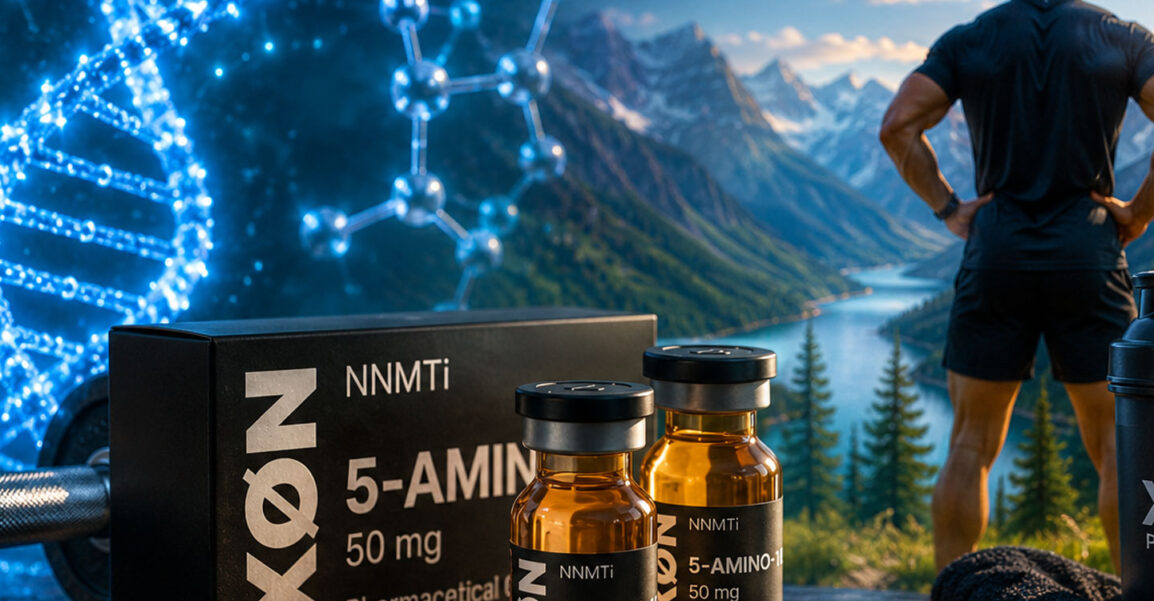

A muscle growth peptide can sound like a shortcut around years of patient lifting: inject a tiny signaling molecule, recover overnight, and wake up looking suspiciously Marvel-adjacent. The reality is far less cinematic.
“Peptides” covers several very different substances. Some stimulate growth hormone release, some mimic growth-related signals, and others are promoted for tendon or gut healing even though limited human evidence. Oral collagen peptides belong in the conversation too, although they work more like a protein supplement than a hormone drug. Meanwhile, MK-677 frequently gets mislabeled as a peptide even though it isn’t one.
This review examines what these compounds can realistically do for lean mass, strength, recovery, and connective tissue. It also covers side effects, product-quality problems, athletic bans, doctor-led monitoring, and safer alternatives. It is educational, not a dosing guide or personalized medical advice.
The short version? Certain prescription peptides have legitimate medical uses and can alter GH/IGF-1 signaling. That doesn’t establish them as safe or effective bodybuilding drugs. Changes on the scale may reflect water, glycogen, appetite, or reduced fat rather than newly built contractile muscle. If you’re considering any hormone-altering compound, bring the exact product to a qualified clinician first. A vial labeled “research use only” isn’t a quality guarantee: it’s usually the opposite.
Key Takeaways
- Muscle growth peptides influence anabolic signaling mainly by increasing growth hormone (GH) and IGF-1 but do not guarantee rapid or significant muscle hypertrophy.
- Lean mass gains from muscle growth peptides often reflect water retention, glycogen storage, or fat loss rather than new muscle fiber growth.
- Many marketed peptides lack robust human trials for safety and efficacy, making consultation with a qualified clinician essential before use.
- Side effects can include insulin resistance, glucose imbalances, edema, and injection-related risks, underscoring the need for medical supervision and lab monitoring.
- Legal and doping risks exist as many peptides are banned substances in sports and sold as unregulated products labeled ‘research use only.’
- Proven muscle-building strategies like progressive resistance training, adequate protein intake, creatine supplementation, and sufficient sleep provide safer, effective alternatives to peptides.
What Is a Muscle Growth Peptide (and How Peptides Work in the Body)
A peptide is a short chain of amino acids that may act as a hormone, messenger, or structural fragment. A so-called muscle growth peptide usually influences anabolic signaling indirectly, often by increasing growth hormone (GH), insulin-like growth factor 1 (IGF-1), or tissue-repair activity.
Your digestive system breaks most ordinary peptides into smaller fragments, which is why many hormone-like products are injected. Oral collagen is an exception: it’s consumed as nutrition, then digested and absorbed as amino acids and small bioactive peptides.
Peptides vs proteins vs steroids vs SARMs (key differences)
These categories aren’t interchangeable:
| Category | What it is | Typical action | Key concern |
| Peptides | Short amino-acid chains | Activate specific receptors or signaling pathways | Purity, injection, endocrine effects |
| Proteins | Longer folded amino-acid chains | Structural, enzymatic, or nutritional roles | Usually digestion-related when supplemented |
| Anabolic steroids | Testosterone-derived drugs | Activate androgen receptors | Cardiovascular, fertility, liver, and hormonal risks |
| SARMs | Nonsteroidal androgen-receptor modulators | Produce tissue-selective androgen signaling in theory | Suppression, liver injury, uncertain long-term safety |
Peptides aren’t steroids, but “not a steroid” does not mean harmless. Different route, different receptor, different risk profile.
Main pathways: GH/IGF-1 axis, insulin signaling, collagen/tendon signaling
GH-releasing compounds prompt your pituitary gland to produce more GH. That can increase liver-derived and local IGF-1, supporting protein turnover, fluid retention, and connective-tissue remodeling. More signaling doesn’t automatically equal more functional muscle, but.
The GH/IGF-1 axis also interacts with insulin and blood glucose. Excess GH can reduce insulin sensitivity, explaining why glucose monitoring matters. Collagen products work differently: they supply glycine, proline, and hydroxyproline-rich material that may support collagen synthesis, especially when paired with loading exercise. Their direct effect on muscle hypertrophy is modest compared with complete dietary protein.
Do Peptides Build Muscle? Evidence Summary (Human Data vs Hype)
Some GH- or IGF-related drugs can increase measured lean body mass under particular clinical conditions. But evidence in healthy lifters is sparse, and an increase in “lean mass” isn’t synonymous with larger, stronger muscle fibers. Lean-mass scans also count body water and non-fat tissue.
Prescription tesamorelin, for example, has evidence for reducing excess visceral abdominal fat in adults with HIV-associated lipodystrophy, not for turning healthy gym-goers into competitive bodybuilders. Claims surrounding BPC-157 and IGF-1 LR3 run much further ahead of controlled human trials.
What outcomes matter: lean mass, strength, recovery, body fat, injury rates
A useful muscle growth peptide review should ask more than “Did body weight rise?” Meaningful outcomes include:
- Muscle thickness or fiber area, not just scale weight
- Strength and performance, measured consistently
- Body composition, including visceral versus subcutaneous fat
- Recovery, using repeatable soreness or performance markers
- Injury rates and return-to-sport time, not anecdotes alone
- Adverse events and durability after stopping
If a compound adds four pounds but your waist, blood pressure, fasting glucose, and lifts worsen, that isn’t a convincing victory. It may simply be expensive edema.
Why results vary: training status, diet, sleep, dosing, and product purity
A beginner with inconsistent training can gain muscle rapidly without drugs: an advanced lifter has less room to improve. Protein intake, calorie availability, sleep, genetics, age, and training quality can all overshadow a peptide’s effect.
Then there’s the vial itself. An unregulated product may contain less active ingredient than stated, a different molecule, bacterial endotoxins, or nothing useful at all. So, online testimonials combine pharmacology with placebo effects, water shifts, simultaneous steroid use, and mystery chemistry. You can’t separate those variables from a dramatic before-and-after photo.
Types of Muscle-Building Peptides and Related Compounds (Mechanisms + What to Expect)
The compounds marketed in this space differ substantially. Some are approved medicines for narrow indications: others have no approved human use. Grouping all of them under “peptides” may be convenient for sellers, but it’s scientifically sloppy.
Growth hormone–releasing peptides (GHRPs/GHRHs): CJC-1295, ipamorelin, sermorelin, tesamorelin
GHRHs mimic growth hormone–releasing hormone, while GHRPs generally activate the ghrelin receptor. Both can increase pulsatile GH release, although their pharmacology and evidence differ.
- Tesamorelin is FDA-approved for reducing excess abdominal fat in adults with HIV-associated lipodystrophy.
- Sermorelin is a GHRH analog historically used diagnostically and therapeutically: compounded versions aren’t equivalent to an FDA-approved bodybuilding treatment.
- CJC-1295 has experimental human data showing prolonged GH/IGF-1 elevations, but it isn’t an approved muscle-building drug.
- Ipamorelin is promoted as selective, yet robust long-term safety and hypertrophy trials in healthy adults are lacking.
Expected effects may include fluid retention, tingling, appetite changes, and altered glucose, not guaranteed strength gains.
IGF-1 analogs: IGF-1 LR3 (potential effects and key risks)
IGF-1 LR3 is a modified, longer-acting research analog. It’s marketed as though it selectively drives nutrients into trained muscle, but credible clinical evidence supporting bodybuilding use is extremely limited.
IGF signaling can promote cell growth and glucose uptake, creating risks such as hypoglycemia, headaches, swelling, and unwanted tissue growth. Long-lasting systemic activity also makes dosing mistakes more consequential. Don’t confuse IGF-1 LR3 with prescription mecasermin, which is approved for specific cases of severe primary IGF-1 deficiency under specialist supervision. Neither is a casual recovery supplement.
Recovery/injury peptides: BPC-157 (what’s known vs unknown)
BPC-157 is a synthetic peptide promoted for tendon, ligament, muscle, and gastrointestinal healing. Most supportive evidence comes from animal or laboratory research. High-quality randomized human trials establishing effective doses, long-term safety, or faster sports-injury recovery remain absent.
That gap matters. A sore elbow improving after an injection doesn’t prove tendon regeneration: symptoms naturally fluctuate, and reduced pain can encourage premature loading. BPC-157 is also prohibited for athletes under WADA’s non-approved substances category. If you have a persistent injury, a diagnosis and graded rehabilitation plan beat self-experimentation with an unidentified vial.
Oral collagen peptides: what they can and can’t do for muscle and connective tissue
Hydrolyzed collagen powders from brands such as Vital Proteins, Great Lakes Wellness, or Sports Research provide collagen-rich amino acids. Studies suggest roughly 10–15 grams taken near loading exercise may support collagen synthesis and could modestly help joint symptoms in some people.
But collagen is low in leucine and isn’t a complete muscle-building protein. Whey, dairy, eggs, soy, or a balanced plant blend stimulates muscle protein synthesis more effectively. Think of collagen as a possible connective-tissue add-on, not your primary post-workout protein. Choose third-party-tested products if sport certification matters.
MK-677 (ibutamoren): not a peptide, why it’s grouped here and how it differs
MK-677 is an orally active ghrelin-receptor agonist, sometimes called a growth hormone secretagogue. It’s grouped with peptides because it can raise GH and IGF-1, but chemically it is not a peptide and doesn’t require injection.
Clinical research has reported increased fat-free mass in certain populations, yet not necessarily proportional improvements in strength or function. Appetite, edema, numbness, fatigue, and worsening glucose control are recurring concerns. MK-677 isn’t FDA-approved, and it is prohibited in tested sport. “Oral” may feel friendlier than a needle: metabolically, it can still create real problems.
Benefits People Seek (and What’s Realistic)
Most people seek faster hypertrophy, less soreness, better sleep, easier fat loss, or injury repair. The realistic effect depends on the compound and your medical context. Someone with a diagnosed hormonal disorder isn’t comparable to a healthy 25-year-old whose main recovery problem is scrolling until 1:30 a.m.
Muscle gain vs water retention: how to interpret scale and “pump” changes
GH-related signaling can increase sodium and water retention. Higher food intake also replenishes glycogen, and each gram of stored glycogen carries additional water. Your muscles may look fuller within days, but contractile tissue accumulates much more slowly.
Track a four-week pattern using morning body weight, waist measurement, standardized photos, and repeatable lifts. A rapid weight jump accompanied by swollen fingers, tighter shoes, or no strength improvement points away from pure hypertrophy. DEXA scans help, but even those can misclassify hydration changes as lean tissue.
Recovery, sleep, appetite, fat loss: which effects are most commonly reported and why
Ghrelin-receptor agonists commonly increase hunger: that may help an under-eating athlete but sabotage fat-loss efforts. Some users report deeper sleep or faster recovery, though subjective sleep quality is vulnerable to expectation effects. A wearable’s “recovery score” isn’t a clinical endpoint, sadly, your smartwatch can’t biopsy a quadriceps.
Tesamorelin can reduce visceral fat in its approved population, but that result shouldn’t be generalized to routine cosmetic cutting. For most healthy people, sleep regularity, adequate carbohydrate around demanding sessions, and intelligently managed training volume provide more predictable recovery benefits.
Side Effects and Long-Term Risks of Muscle Growth Peptides
Risks depend on the molecule, dose, duration, source, and your health history. Because many bodybuilding products lack long-term trials, “no documented harm” often means insufficient evidence, not demonstrated safety.
Metabolic effects: insulin resistance, glucose changes, edema, blood pressure
Chronically elevated GH can oppose insulin action. Possible warning signs include rising fasting glucose or A1C, intense thirst, frequent urination, unusual fatigue, and blurred vision. Fluid retention may cause ankle swelling, carpal-tunnel-like tingling, headaches, or higher blood pressure.
IGF-like products can push in another direction and provoke low blood sugar, especially around exercise or when combined with glucose-lowering medication. Confusion, shaking, sweating, or faintness requires urgent attention. These aren’t side effects you should “tough out” for another training block.
Cancer and growth signaling concerns (GH/IGF-1 context and uncertainty)
GH and IGF-1 don’t simply grow biceps: their receptors exist throughout the body. Epidemiologic research links higher IGF-1 levels with certain cancers, but association does not prove that short-term peptide exposure causes cancer. The individual risk remains difficult to quantify.
Still, stimulating growth pathways is particularly concerning with active malignancy, unexplained masses, or incomplete cancer screening. Prescription tesamorelin labeling, for example, warns against use with active malignancy. Long-term safety evidence for underground combinations is essentially nonexistent. If someone guarantees “zero cancer risk,” they’re selling certainty that the science doesn’t possess.
Injection-related risks: infection, dosing errors, contamination, scar tissue
Unsterile injections can cause cellulitis, abscesses, blood-borne infection, and tissue damage. Reconstituting powders introduces opportunities for incorrect concentration, contaminated water, improper storage, and calculation mistakes. Repeatedly using one site may produce irritation or scar tissue.
Seek prompt care for spreading redness, warmth, pus, fever, severe pain, red streaking, or systemic illness. Don’t inject a product with particles, discoloration, damaged packaging, or uncertain provenance. More fundamentally, don’t assume a polished label and QR code prove sterility, they don’t.
Drug interactions and contraindications (who should avoid peptides)
You need individualized medical advice if you use insulin, diabetes drugs, blood-pressure medication, anticoagulants, corticosteroids, or other hormone-active drugs. Combining secretagogues multiplies uncertainty rather than neatly stacking benefits.
Avoid unsupervised use during pregnancy or breastfeeding, while under 18, with active cancer, or with uncontrolled diabetes. Pituitary disease, severe sleep apnea, unexplained headaches or vision changes, heart or kidney disease, and prior malignancy require specialist review. You should also disclose supplements and performance-enhancing drugs honestly: your clinician can’t evaluate interactions with half the ingredient list missing.
Legality, Regulation, and Athletic Drug Testing (WADA/USADA and Prescription Use)
Legal status depends on the exact compound, indication, seller, and jurisdiction. A medication may be lawful with a valid prescription for an approved condition while remaining banned in sport. Compounding doesn’t magically create FDA approval for a bodybuilding indication.
The World Anti-Doping Agency Prohibited List covers peptide hormones, growth factors, GH secretagogues, and related substances. Athletes should also search the USADA substance guidance and verify every medication before use.
Why “research peptides” are high-risk: mislabeling, impurities, and no oversight
“Not for human consumption” means a seller isn’t representing the product as an approved human drug. It doesn’t mean the powder passed pharmaceutical manufacturing, sterility, stability, or identity standards.
Independent analyses of gray-market performance products have repeatedly found mislabeled concentrations and undeclared ingredients. A certificate of analysis supplied by the same vendor is weaker evidence than verified, batch-specific testing from an independent accredited laboratory. The FDA’s compounding and unapproved-drug resources explain why compounded or unapproved products don’t undergo the same premarket review as approved medicines.
Detection windows and testing risk overview for competitive athletes
There is no dependable universal detection window. It varies with the substance, metabolites, dose, formulation, administration pattern, sample type, laboratory method, and individual physiology. Testing capabilities also evolve. Advice claiming a compound is “clear in 48 hours” may be outdated, or simply invented.
Under strict liability, athletes are generally responsible for prohibited substances found in their samples, even when contamination or poor advice contributed. Supplements certified by NSF Certified for Sport or Informed Sport reduce contamination risk but can’t make a prohibited peptide permissible. Check therapeutic-use-exemption requirements before treatment, not after a positive test.
If You’re Considering Peptides: Clinical Safety Checklist (Doctor-Led)
Start with the question beneath the question: are you treating a diagnosed condition, or trying to accelerate normal adaptation? A board-certified endocrinologist or sports-medicine physician can evaluate symptoms without assuming every plateau reflects “low GH.” Avoid clinics that diagnose deficiency from symptoms alone and sell the treatment during the same five-minute call.
Pre-check labs and screening (IGF-1, A1C/glucose, lipids, BP, cancer screening)
A clinician may review:
- Medical, medication, supplement, and family history
- Blood pressure, weight, waist circumference, and edema
- Fasting glucose and A1C
- IGF-1 interpreted for age and laboratory range
- Lipid profile and appropriate liver/kidney testing
- Sleep-apnea symptoms and cardiovascular risk
- Age-appropriate cancer screening
Testing depends on the proposed medicine and your symptoms. One isolated IGF-1 value doesn’t diagnose adult GH deficiency: formal endocrine evaluation may require stimulation testing. Buying treatment first and ordering labs later is the medical equivalent of installing smoke alarms after the kitchen fire.
Monitoring plan, red-flag symptoms, and when to stop
Before starting any legitimate prescription, agree on measurable goals, follow-up timing, lab thresholds, and stopping rules. Monitoring may include glucose, A1C, IGF-1, blood pressure, edema, neurological symptoms, and progress toward the approved treatment objective.
Stop and obtain urgent medical help for chest pain, breathing difficulty, fainting, severe headache, new vision changes, confusion, allergic swelling, signs of serious infection, or symptomatic hypoglycemia. Contact your clinician promptly for persistent swelling, numb hands, rising blood pressure, unusual thirst, or rapid unexplained weight gain. Never respond to side effects by casually adding another drug.
Safer, Evidence-Based Alternatives to Peptides for Muscle Growth
For healthy adults, proven basics offer a better risk-to-reward ratio than an unapproved muscle growth peptide. They’re less exciting, admittedly. Nobody posts a dramatic unboxing video for eight hours of sleep.
| Option | Evidence-supported role | Typical cost |
| Progressive resistance training | Primary hypertrophy stimulus | Gym or home-equipment cost |
| Adequate protein | Supplies amino acids for repair and growth | Food budget |
| Creatine monohydrate | Improves high-intensity performance and lean-mass gains | About $15–$30 monthly |
| Sports dietitian or coach | Solves programming and intake errors | Varies by provider |
| Physical therapy | Diagnoses and rehabilitates injuries | Coverage/location dependent |
If fatigue, poor recovery, or stalled progress persists even though consistent habits, request a medical evaluation. Anemia, thyroid disease, sleep apnea, low energy availability, depression, and medication effects can masquerade as a training plateau.
– Training: progressive overload, volume targets, and recovery programming
Build each major muscle roughly twice weekly and begin around 8–12 challenging sets per muscle per week. Some lifters thrive with more, but adding sets only helps while you can recover. Keep most work within about one to three repetitions of failure, use stable technique, and record loads and reps.
Progress by adding a repetition, a small amount of weight, or an extra set when performance is stable. If lifts regress for multiple sessions, joints ache, and motivation crashes, reduce volume for a week. More punishment isn’t always more stimulus.
Nutrition: protein targets, calorie surplus, creatine, and sleep optimization
Aim for approximately 1.6–2.2 grams of protein per kilogram of body weight daily, spread across three to five meals. A modest surplus, often 150–300 calories per day, is easier to adjust than an uncontrolled “bulk.” Vegetarians can succeed by emphasizing soy, legumes, seitan, dairy or eggs when included, and complementary protein sources.
Creatine monohydrate at 3–5 grams daily is inexpensive and extensively studied: loading is optional. Choose products with third-party certification. Finally, protect seven to nine hours for sleep and keep your schedule consistent. Try this for eight weeks before declaring your genetics broken:
- Log every working set.
- Hit your protein target most days.
- Track weekly average weight.
- Adjust calories only after two stable weeks.
Muscle Growth Peptide FAQs
Questions about peptides often blur pharmaceutical treatment, experimental drugs, and ordinary nutrition. These quick answers separate the categories without pretending the evidence is stronger than it is.
How quickly do peptides work, and what changes are usually not “real muscle”?
Hormone levels, hunger, sleep sensations, fluid balance, and muscle fullness may change within days. Visible hypertrophy and meaningful strength adaptation generally take weeks to months, even with enhanced signaling.
Rapid scale gain is likely to include water, glycogen, food mass, and possibly fat. Look for sustained improvements in measurements and performance after hydration stabilizes. If fullness disappears soon after discontinuation, it probably wasn’t all new contractile tissue. Be skeptical of seven-day transformations photographed under different lighting with a heroic post-workout pump.
Do peptides affect testosterone? Are peptides steroids?
Peptides are not anabolic steroids and don’t all directly activate androgen receptors. Their effects on testosterone vary. GH-releasing compounds aren’t established substitutes for testosterone therapy, while illness, calorie intake, sleep, other drugs, and endocrine feedback can influence your lab results.
Don’t assume a peptide cycle is hormonally neutral, especially when products are stacked with SARMs or steroids. If you have symptoms of low testosterone, obtain properly timed laboratory testing and medical interpretation rather than treating yourself from a single online panel.
Eventually, the muscle growth peptide market mixes legitimate prescription medicine with experimental compounds and aggressive marketing. Human evidence for healthy lifters remains limited, while metabolic, injection, contamination, and sporting risks are tangible. Your strongest next move is refreshingly unglamorous: train progressively, eat enough high-quality protein, use well-supported supplements such as creatine, sleep consistently, and investigate genuine medical symptoms with a qualified clinician. Slow progress can be frustrating, but it’s still progress you can measure, keep, and build on safely.