Description
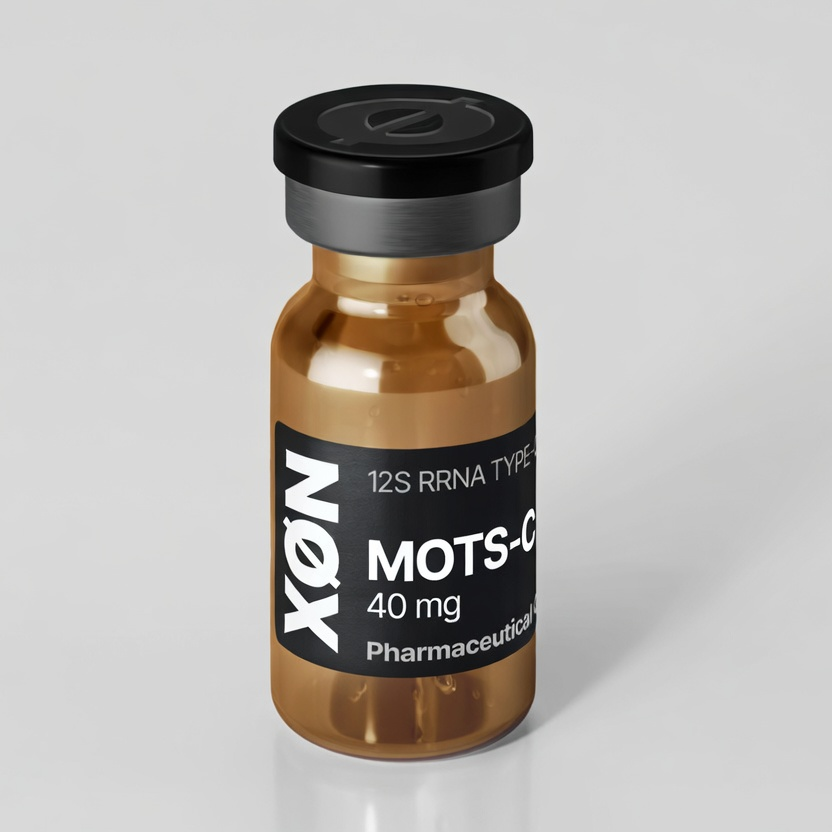
MOTS-c (Mitochondrial Open Reading Frame of the 12S rRNA-c) is a mitochondria-derived research peptide composed of 16 amino acids and encoded within the mitochondrial genome. It has attracted significant interest in preclinical research due to its role in metabolic regulation, mitochondrial signaling, and cellular stress adaptation.
1. Supports Cellular Energy Metabolism
One of the primary benefits of MOTS-c is its role in regulating cellular energy balance. Research indicates that MOTS-c activates AMP-activated protein kinase (AMPK), a master regulator of energy homeostasis that helps cells adapt to low-energy states and metabolic stress.
2. Enhances Mitochondrial Function and Homeostasis
Because MOTS-c originates from mitochondria, it is closely involved in mitochondrial communication with the nucleus. Studies suggest it supports mitochondrial homeostasis, helping cells maintain efficient energy production and metabolic flexibility under challenging conditions.
3. Supports Metabolic Stress Adaptation
MOTS-c has been shown in preclinical models to play a role in cellular adaptation to metabolic stress, such as nutrient limitation or increased energy demand. This makes it a valuable peptide in research exploring resilience mechanisms and metabolic flexibility.
4. Influences Glucose and Lipid Metabolism Pathways
Through AMPK activation and downstream signaling, MOTS-c is studied for its effects on glucose utilization, insulin-related pathways, and lipid metabolism. These properties are particularly relevant in research focused on metabolic health and endocrine signaling.
5. Potential Role in Aging and Longevity Research
Mitochondrial efficiency is closely linked to aging processes. MOTS-c is widely used in aging and longevity research to study how mitochondrial-derived peptides may influence cellular aging, metabolic decline, and stress resistance over time.
6. Supports Nuclear–Mitochondrial Communication Research
MOTS-c is notable for its ability to translocate to the nucleus under stress conditions, where it may influence gene expression related to metabolism and stress response. This makes it an important model compound for studying mitochondrial-to-nuclear signaling (mitokines).
7. Valuable Tool in Exercise and Adaptation Models
Due to its effects on energy regulation and metabolic efficiency, MOTS-c is often studied in experimental models related to physical performance, endurance adaptation, and exercise-induced metabolic changes.
8. Important Research Peptide in Metabolic Biology
Overall, MOTS-c is considered a key research peptide for investigating mitochondrial signaling, metabolic control, stress adaptation, and systems-level energy regulation. Its mitochondrial origin provides unique insights not offered by nuclear-encoded peptides.
Summary
In research settings, MOTS-c is valued for its potential benefits related to energy metabolism, AMPK activation, mitochondrial homeostasis, stress adaptation, and aging biology. Its role as a mitochondrial signaling peptide makes it a powerful tool for advancing understanding of metabolic regulation and mitochondrial-nuclear communication.
Lyophilized (freeze-dried) peptides should be stored in a refrigerator at 2–8°C (36–46°F). For long-term storage, they should be kept in a freezer at -20°C (-4°F) or below. Once reconstituted, peptides must be stored in a refrigerator at 2–8°C (36–46°F) and should not be left at room temperature for extended periods.
Add 2mL of bacteriostatic water to get a solution that is 20mg/mL, such that every 0.1mL (10 units on an insulin syringe) is equal to 2mg of MOTS-C.




















Yusef Mo
My current dosage is just mornings. 2mg per morning. 5 days on, 2 days off.
Took my first yesterday because after researching i decided to take this as an aid for my insulin resistance. After I took it and did some strength training. I noticed I can push a lot more and it feels great! I hope to see results after couple weeks or in a month. Im taking this along with tirz. I always feel lazy to strength train but after I took It, I gave it a shot to train and see. Maybe its psychologial. But i know my limits and it feels i crushed my limits effortlessly.
jamethorton433
I’ve always had issues with getting a 6 pack. This is really starting to help show it.
I’ve always been more of a strength training type. Getting stronger and bigger, but I’ve always had issues getting a bit of a more cut look and getting a 6 pack.
After using these guys Mots-c for a few weeks, I’m starting to see a 4 pack, will continue with this and aim to get a full 6 pack while continuing the same training routine.