Description
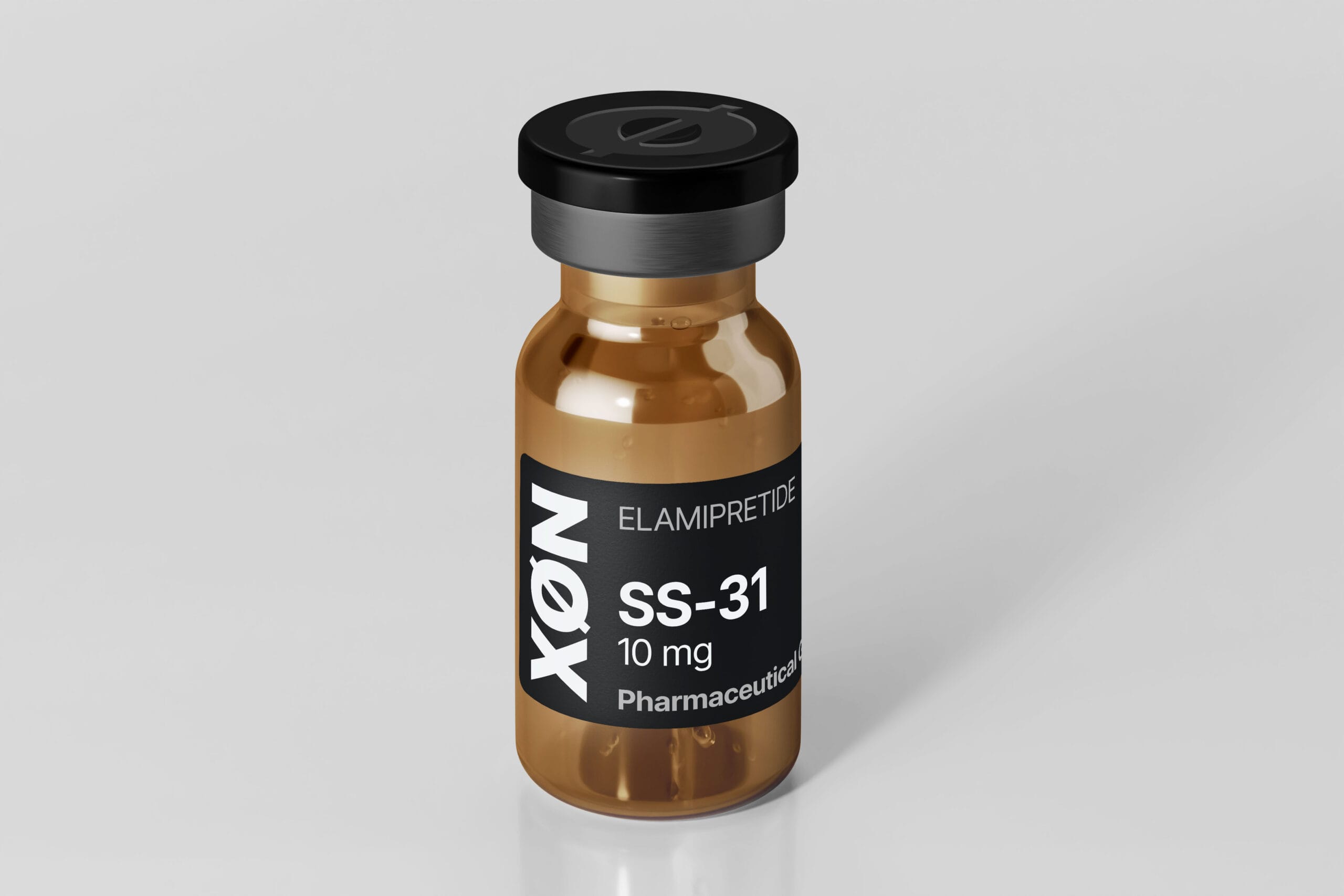
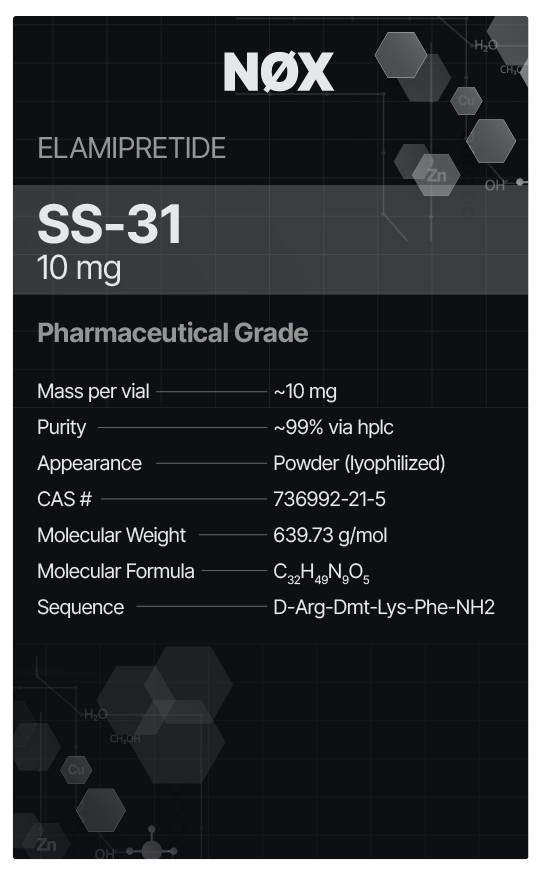
SS-31 (Elamipretide) is a synthetic mitochondria-targeting tetrapeptide specifically designed to act within the cell’s energy-producing organelles rather than on surface receptors. Its unique ability to bind cardiolipin—a critical phospholipid in the inner mitochondrial membrane—has made SS-31 a major focus of research into mitochondrial protection, cellular energy efficiency, and metabolic resilience.
1. Protects Mitochondrial Membrane Integrity
One of the most important benefits of SS-31 is its ability to stabilize the inner mitochondrial membrane. By binding directly to cardiolipin, SS-31 helps preserve mitochondrial structure, which is essential for efficient electron transport and ATP production.
2. Improves Cellular Energy Production
Healthy mitochondria are essential for energy generation. SS-31 is studied for its role in optimizing oxidative phosphorylation, allowing cells to produce energy more efficiently while reducing energy loss caused by membrane instability or dysfunction.
3. Reduces Mitochondrial Oxidative Stress
SS-31 has been shown to help limit excess reactive oxygen species (ROS) formation within mitochondria. By improving electron transport chain efficiency, it supports research into oxidative stress reduction and mitochondrial redox balance.
4. Supports Mitochondrial Efficiency Under Stress
Cells exposed to metabolic, mechanical, or environmental stress often experience mitochondrial dysfunction. SS-31 is widely studied for its potential to maintain mitochondrial performance under stress conditions, making it valuable in resilience and recovery research models.
5. Enhances Cellular Survival Signaling
Mitochondrial integrity plays a central role in determining cell survival. SS-31 is used in research examining mitochondria-mediated apoptosis regulation, helping scientists understand how mitochondrial protection influences cell viability and stress tolerance.
6. Supports Muscle and Endurance Research
Skeletal and cardiac muscle cells are highly energy-dependent. SS-31 is frequently studied in muscle metabolism and endurance models to explore how improved mitochondrial efficiency may support muscle performance, recovery signaling, and fatigue resistance.
7. Relevant to Aging and Longevity Research
Mitochondrial decline is a hallmark of aging. SS-31 is a key compound in aging and longevity research, where scientists investigate how preserving mitochondrial structure and function may support cellular health and age-related metabolic stability.
8. Neuroprotective and Cardiometabolic Research Applications
Because neurons and cardiac cells rely heavily on mitochondrial energy, SS-31 is studied in neurobiology and cardiometabolic research for its role in maintaining cellular energy balance and mitochondrial resilience in high-demand tissues.
9. Unique Mechanism Compared to Receptor-Based Peptides
Unlike many peptides that act through surface receptors, SS-31 works directly inside mitochondria. This direct mechanism makes it a valuable tool for studying organelle-specific therapies and mitochondrial-targeted interventions.
10. Valuable Tool in Mitochondrial Biology Research
SS-31 is widely used to study:
Mitochondrial membrane dynamics
Cardiolipin biology
Cellular bioenergetics
Oxidative stress regulation
Energy efficiency under pathological conditions
Its targeted action allows researchers to explore root causes of mitochondrial dysfunction rather than downstream symptoms.
Summary
In research contexts, SS-31 (Elamipretide) is valued for its potential benefits related to mitochondrial membrane protection, improved cellular energy production, reduced oxidative stress, enhanced stress resilience, and support of high-energy tissues. Its cardiolipin-targeting mechanism places it at the forefront of mitochondrial health and bioenergetics research.
Lyophilized (freeze-dried) peptides should be stored in a refrigerator at 2–8°C (36–46°F). For long-term storage, they should be kept in a freezer at -20°C (-4°F) or below. Once reconstituted, peptides must be stored in a refrigerator at 2–8°C (36–46°F) and should not be left at room temperature for extended periods.
Add 1mL of bacteriostatic water to get a solution that is 25mg/mL, such that every 0.1mL (10 units on an insulin syringe) is equal to 1mg of SS-31.
















KeenanLifts
SS-31 ended up being one of the more subtle products I tried, but after a few weeks I started noticing improvements in overall energy and recovery. The biggest difference was feeling less drained after long training sessions and recovering a bit faster between workouts. I also felt like my endurance was more consistent, especially on days when I would normally be running low on energy. What I liked most was that the effects felt steady and natural rather than overly stimulating. After reading about its research related to mitochondrial function and cellular energy production, I was curious to give it a try, and overall it turned out to be a worthwhile addition to my routine.