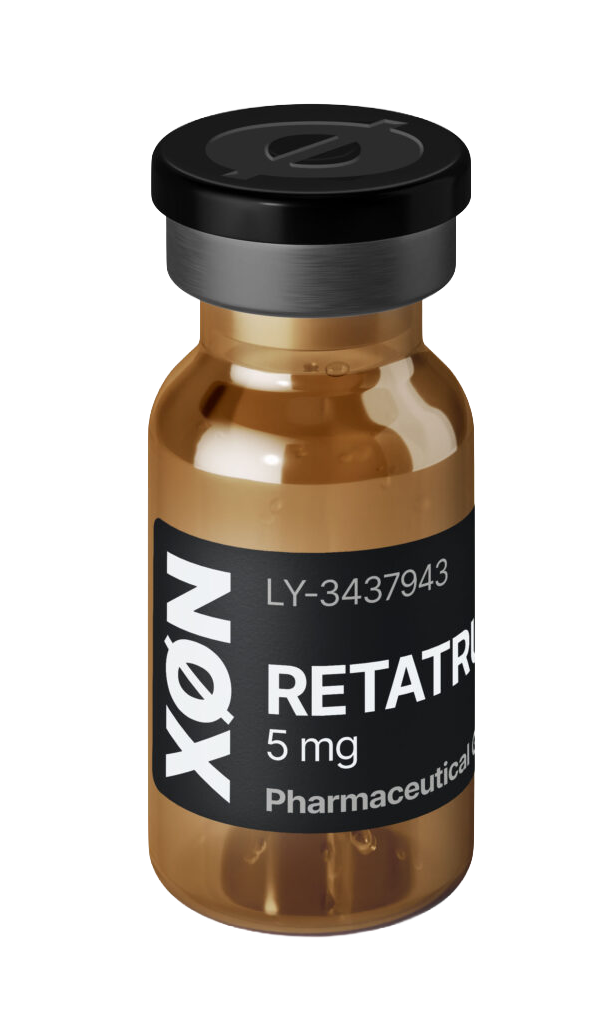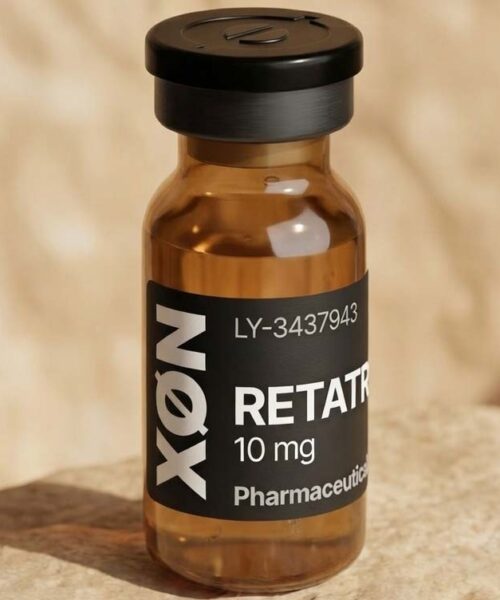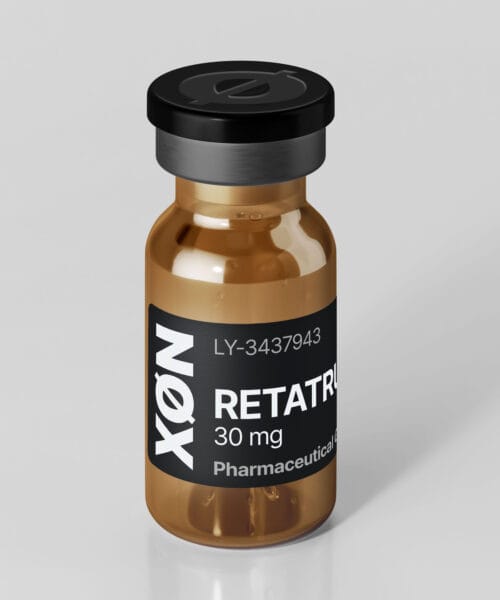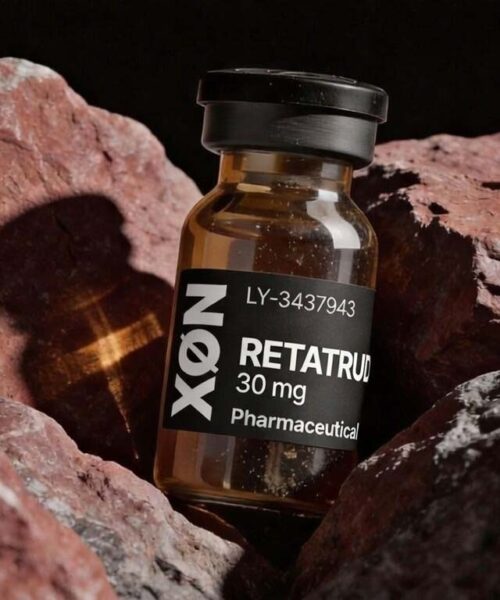


The retatrutide peptide has earned an unofficial nickname, “triple G”, and attention rarely moves this quickly unless weight loss is involved. In a phase 2 obesity trial, the highest-dose group achieved an average weight reduction of roughly 24% at 48 weeks. That result was striking, but it wasn’t proof that retatrutide is approved, appropriate for everyone, or safe to buy from an online peptide shop.
This review separates clinical evidence from internet hype. You’ll learn how retatrutide’s three-receptor mechanism differs from semaglutide and tirzepatide, what researchers have observed in obesity and diabetes trials, and which safety questions remain unresolved. We’ll also examine the practical problem behind products advertised as “research-grade retatrutide”: a polished certificate and frosty vial don’t establish identity, sterility, or suitability for injection.
Retatrutide remains an investigational medicine. This guide is educational, not individualized medical advice, a dosing protocol, or an endorsement of unapproved products.
Key Takeaways
- Retatrutide peptide is a triple-receptor agonist targeting GIP, GLP-1, and glucagon, showing promising weight loss results with up to 24% reduction in phase 2 trials.
- Unlike approved drugs semaglutide and tirzepatide, retatrutide’s glucagon activation may boost energy expenditure and fat metabolism but requires further safety validation.
- Retatrutide is investigational and not FDA-approved; purchasing it online poses risks due to potential issues with identity, purity, sterility, and dosage accuracy.
- Common side effects are gastrointestinal and dose-dependent; serious safety concerns and long-term effects remain under study in ongoing clinical trials.
- Self-dosing with unapproved retatrutide is risky without medical supervision, as clinical trials use precise protocols and monitoring not replicable at home.
- FDA-approved alternatives for weight management exist with established safety profiles, and treatment is most effective alongside comprehensive lifestyle support.
What is retatrutide and what makes the Retatrutide peptide different?
Retatrutide is a synthetic peptide being developed by Eli Lilly for chronic weight management and related metabolic conditions. It activates three hormone receptors, GIP, GLP-1, and glucagon, which is why researchers call it a triple-receptor agonist.
That third target distinguishes it from approved drugs such as Wegovy, which acts on GLP-1, and Zepbound, which targets GIP and GLP-1. The glucagon component may increase energy expenditure and influence liver metabolism while the other pathways reduce appetite and food intake.
Promising mechanism, though, isn’t the same as a finished medicine. Trial manufacturing, clinical monitoring, and validated injection devices are fundamentally different from an anonymous vial labeled “retatrutide peptide.”
How retatrutide works (triple agonist): GIP vs GLP-1 vs glucagon receptors
Each receptor contributes something different:
- GLP-1: increases glucose-dependent insulin secretion, reduces glucagon when glucose is elevated, slows gastric emptying, and promotes fullness.
- GIP: supports glucose-dependent insulin release and may complement GLP-1’s effects on appetite and fat metabolism.
- Glucagon: can increase hepatic glucose production, but it may also raise energy expenditure and encourage fat oxidation.
That last pathway sounds contradictory, why stimulate glucagon in a metabolic drug? The working idea is balance. GIP and GLP-1 help control glucose and appetite while carefully calibrated glucagon activity may add metabolic benefits. Retatrutide is engineered as one molecule, not three peptides casually mixed together like a questionable kitchen smoothie.
What the clinical research says so far (weight, A1C, liver fat, cardiometabolic markers)
In the 48-week phase 2 obesity trial, participants receiving 12 mg had a mean weight reduction of 24.2%, versus about 2.1% with placebo. Nearly two-thirds of that group lost at least 20% of their starting weight. Participants had obesity or overweight with a weight-related condition, but not diabetes.
A separate phase 2 type 2 diabetes trial found meaningful reductions in A1C and body weight over 36 weeks. Exploratory analyses have also reported substantial liver-fat reductions among participants with excess hepatic fat.
Blood pressure, triglycerides, waist circumference, and other cardiometabolic markers generally moved favorably. But, phase 2 studies are relatively short. Long-term cardiovascular outcomes, uncommon adverse events, and weight maintenance still require larger trials.
Retatrutide vs semaglutide vs tirzepatide: key differences in mechanism, outcomes, and tolerability
These drugs shouldn’t be compared as if they competed under identical conditions. Trials differed in duration, participants, titration, and analysis methods.
| Medication | Receptor mechanism | Regulatory position | Selected obesity-trial result |
| Semaglutide | GLP-1 | Approved as Wegovy | About 15% mean loss at 68 weeks in STEP 1 |
| Tirzepatide | GIP/GLP-1 | Approved as Zepbound | Up to about 21% at 72 weeks in SURMOUNT-1 |
| Retatrutide | GIP/GLP-1/glucagon | Investigational | Up to 24.2% at 48 weeks in phase 2 |
All three commonly cause nausea, diarrhea, vomiting, and constipation, especially during escalation. Retatrutide’s apparent efficacy is exciting, but direct head-to-head evidence and complete phase 3 safety data are needed.
Is retatrutide FDA-approved? Current regulatory status and what “investigational” means
Retatrutide is not FDA-approved and has no approved retail brand, prescribing label, or authorized commercial supply for patient treatment. It’s being evaluated in Lilly’s phase 3 TRIUMPH program.
“Investigational” means researchers may administer it within authorized studies conducted under formal protocols, with informed consent, eligibility screening, controlled supplies, and adverse-event monitoring. It doesn’t mean the drug is secretly available through compounding websites or “not yet approved but basically safe.”
The FDA warns consumers about unapproved GLP-1 products. If a seller claims its retatrutide is FDA-approved, prescription-equivalent, or an authentic Lilly product, treat that as a decisive red flag.
Who is being studied in trials (eligibility, contraindications, and medical screening considerations)
Eligibility varies by protocol. Studies have included adults with obesity, adults with overweight plus related conditions, and people with type 2 diabetes. Some phase 3 trials examine obstructive sleep apnea, knee osteoarthritis, cardiovascular outcomes, or metabolic dysfunction-associated steatotic liver disease.
Screening can include medical history, medication review, pregnancy testing, laboratory work, ECGs, and assessment of pancreatic, gastrointestinal, endocrine, gallbladder, kidney, and liver conditions. Trials also apply specific exclusion criteria.
You shouldn’t interpret trial eligibility as personal clearance. A participant receives standardized medication and follow-up: an online buyer doesn’t. You can review individual requirements through the official ClinicalTrials.gov retatrutide listings.
Side effects and safety risks: common GI effects, serious warnings, and when to seek care
Gastrointestinal effects dominate the current safety picture. Reported problems include nausea, diarrhea, vomiting, constipation, reduced appetite, and abdominal discomfort. They tend to appear during dose escalation and are often mild to moderate, but dehydration can become medically significant.
Phase 2 research also observed dose-dependent increases in heart rate. Potential concerns informed by the incretin-drug class include pancreatitis, gallbladder disease, acute kidney injury related to dehydration, severe gastrointestinal reactions, hypoglycemia when combined with certain diabetes medicines, and hypersensitivity.
Seek urgent care for severe or persistent abdominal pain, repeated vomiting, inability to keep fluids down, fainting, breathing difficulty, facial swelling, confusion, or symptoms of severe hypoglycemia. Don’t “push through” a serious reaction for the scale.
Risks of buying “retatrutide peptide” online (identity, potency, sterility, contamination, cold-chain)
An online label can’t tell you what’s actually inside a vial. The material may contain the wrong peptide, an inaccurate dose, degradation products, residual solvents, bacteria, endotoxins, or visible and invisible particles. Even chemically authentic retatrutide isn’t automatically sterile or safe for human use.
Cold-chain failures introduce another blind spot. A package may arrive beside a melted ice pack after sitting in a delivery van, and clear powder can still be degraded. Counterfeit documentation is easy to duplicate, while vendors may disappear before adverse events surface.
Most importantly, “for research use only” means not for human consumption. It isn’t a playful legal wink. It tells you the product hasn’t been authorized as medicine.
Quality checklist for research peptides: COA, lot tracking, HPLC/LC-MS, sterility/endotoxin, storage
Laboratories evaluating a legitimate research material should document more than a purity percentage:
- A certificate of analysis tied to the vial’s exact lot or batch
- Laboratory identity, testing date, methods, and authorized sign-off
- HPLC data for purity and LC-MS evidence supporting molecular identity
- Sterility and bacterial-endotoxin results when relevant to the research
- Water content, residual-solvent, and counterion information where applicable
- Traceable manufacturing, shipping, and storage records
A chromatogram screenshot isn’t a safety guarantee. HPLC may show relative purity without proving sterility, concentration, or identity: LC-MS doesn’t establish that a product is suitable for injection. Independent testing improves research confidence but cannot convert an unapproved vial into an FDA-approved medication.
Handling and storage basics (cold-chain, temperature excursions, shelf life, reconstitution cautions)
Storage requirements must come from validated, product-specific stability data, not from a forum post or a generic peptide chart. Temperature, light, moisture, agitation, container type, and repeated warming can affect peptide stability. A seller’s recommended shelf life means little unless it is supported by stability testing for that exact formulation.
Reconstitution adds contamination and dosing risks. The choice of diluent, aseptic environment, concentration calculation, mixing method, and beyond-use period all matter. Home kitchens aren’t cleanrooms (mine certainly isn’t).
Because no FDA-approved retatrutide product has consumer storage instructions, there’s no validated home-handling recipe to follow. Trial sites use sponsor-controlled procedures. Don’t inject material after an unexplained temperature excursion, damaged seal, discoloration, cloudiness, or visible particles.
Dosing and administration: what is known from trials vs why self-dosing is risky (educational overview)
Retatrutide has been studied as a once-weekly subcutaneous injection. In the phase 2 obesity study, assigned maintenance doses ranged from 1 mg to 12 mg, and higher-dose groups used different starting and escalation schedules. Those details helped researchers investigate dose response and tolerability: they weren’t instructions for unsupervised use.
Self-dosing is risky because online vial concentration may be wrong, syringe-unit conversions invite errors, and individual factors can alter tolerability. Faster escalation can intensify gastrointestinal effects and dehydration. You may also mistake a counterfeit or contaminated product reaction for an expected side effect.
In short, trial doses belong inside trial protocols. A clinician cannot make a mystery vial safe by helping you calculate the volume.
Drug interactions and special populations (diabetes meds, gallbladder disease, kidney/liver issues, pregnancy)
Retatrutide may increase hypoglycemia risk when used alongside insulin or sulfonylureas, even though incretin effects are glucose-dependent. Delayed gastric emptying could also influence the absorption of some oral medicines. Because the final prescribing label doesn’t exist, the complete interaction profile remains unsettled.
Extra caution is warranted if you have a history of pancreatitis, gallstones or gallbladder disease, severe gastrointestinal symptoms, kidney impairment, liver disease, or an endocrine condition. Vomiting and diarrhea can worsen kidney function through dehydration.
Pregnancy and weight-loss treatment don’t mix: intentional weight reduction offers no expected benefit during pregnancy, and fetal safety data for retatrutide are inadequate. If you’re pregnant, breastfeeding, planning pregnancy, or using oral contraception, discuss medication choices with a qualified clinician.
Safer alternatives: clinician-supervised anti-obesity medications and evidence-based weight management
You don’t have to choose between a mystery peptide and “just try harder.” FDA-approved options include semaglutide (Wegovy), tirzepatide (Zepbound), liraglutide (Saxenda), phentermine/topiramate ER (Qsymia), naltrexone/bupropion ER (Contrave), and orlistat. Availability, contraindications, insurance coverage, and likely benefit differ considerably.
A useful appointment covers your weight history, blood pressure, A1C, sleep, eating patterns, medications, and goals, not merely BMI. Ask what outcome would justify continuing treatment and how side effects will be managed.
Medication works best inside a sustainable plan involving protein and fiber intake, resistance training, movement you’ll repeat, sleep support, and follow-up. For qualifying patients, metabolic surgery is also an evidence-based option, not a moral defeat or “easy way out.”
Frequently asked questions about Retatrutide peptide
Search results often blur the boundary between a pharmaceutical candidate and an online chemical. These quick answers address the confusion without turning an investigational compound into a DIY project.
Is “retatrutide peptide” the same as the branded investigational injection?
No. Retatrutide used in Lilly-sponsored trials is manufactured, packaged, tracked, and administered under controlled research procedures. A vial sold online with the same molecule name has no verified connection to that supply. Retatrutide also has no FDA-approved consumer brand at present. Similar labeling, or even matching molecular identity, doesn’t establish equivalent formulation, potency, purity, sterility, stability, or clinical safety.
How do I verify a COA and match it to a lot number?
Confirm that the COA’s batch number exactly matches the vial and packaging. Check the testing laboratory independently, then request complete, dated analytical reports rather than a cropped image. Look for sample identifiers across HPLC, LC-MS, sterility, and endotoxin documents.
Next, ask whether the laboratory received a sealed sample independently or tested material selected by the seller. Seller-submitted samples can differ from shipped inventory. Contact the lab using independently located details, not the email printed on the certificate. Remember: a genuine COA documents a particular test sample: it doesn’t approve the product for human injection.
What are the biggest red flags when shopping online?
Walk away from sellers offering human dosing instructions while displaying “research only,” accepting only cryptocurrency, copying COAs across batches, or promising “pharmaceutical-grade” material without a licensed manufacturer. Other warning signs include dramatic before-and-after photos, no physical business identity, missing cold-chain records, implausibly low prices, and claims of FDA approval.
Also beware of sites selling retatrutide alongside sterile water and syringes while insisting they don’t expect human use. That contradiction isn’t subtle. If you want weight-loss treatment, redirect the money toward a licensed obesity-medicine clinician and a regulated pharmacy.
References and primary sources (clinical trials, prescribing-class safety info, regulatory links)
- Jastreboff AM, et al. Triple-Hormone-Receptor Agonist Retatrutide for Obesity. New England Journal of Medicine. 2023.
- Rosenstock J, et al. Retatrutide in participants with type 2 diabetes. The Lancet. 2023.
- Sanyal AJ, et al. Retatrutide and liver-fat reduction. Nature Medicine. 2024.
- Wilding JPH, et al. Once-weekly semaglutide in adults with overweight or obesity. New England Journal of Medicine. 2021.
- Jastreboff AM, et al. Tirzepatide once weekly for obesity. New England Journal of Medicine. 2022.
- Review ongoing studies in the ClinicalTrials.gov retatrutide database and approval information in the FDA Drugs database.
The bottom line is refreshingly unglamorous: retatrutide peptide research is compelling, but retatrutide remains investigational. Phase 2 results cannot verify an internet vial or replace medical screening. If you’re interested in treatment, bring the evidence, not the mystery product, to a licensed clinician. You already have regulated options with known labels, pharmacy controls, and real-world monitoring while phase 3 researchers answer the remaining questions.