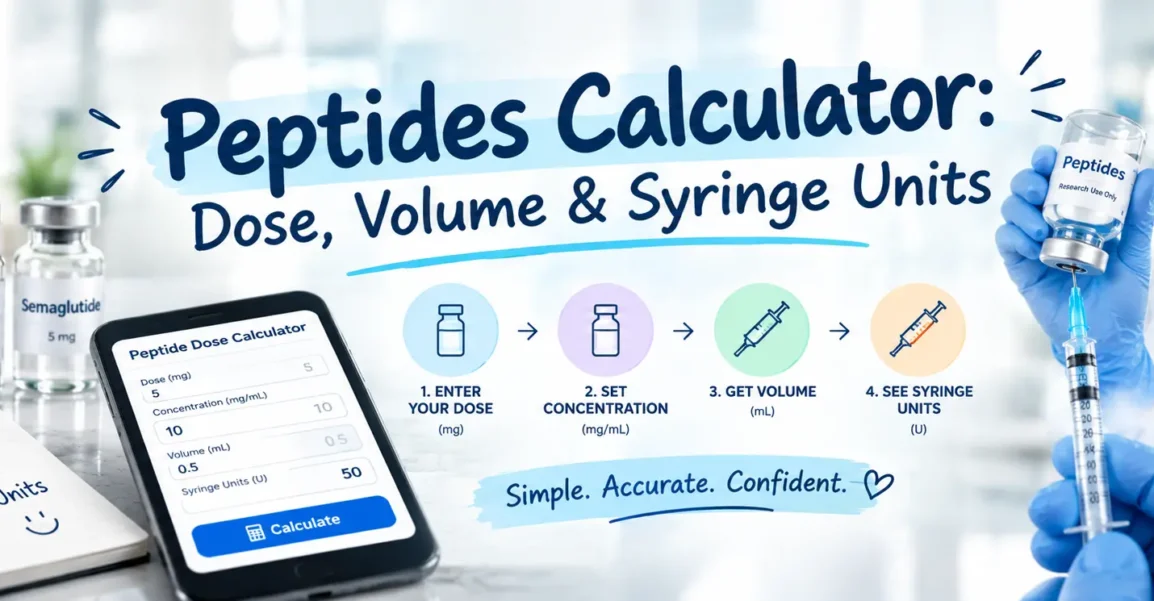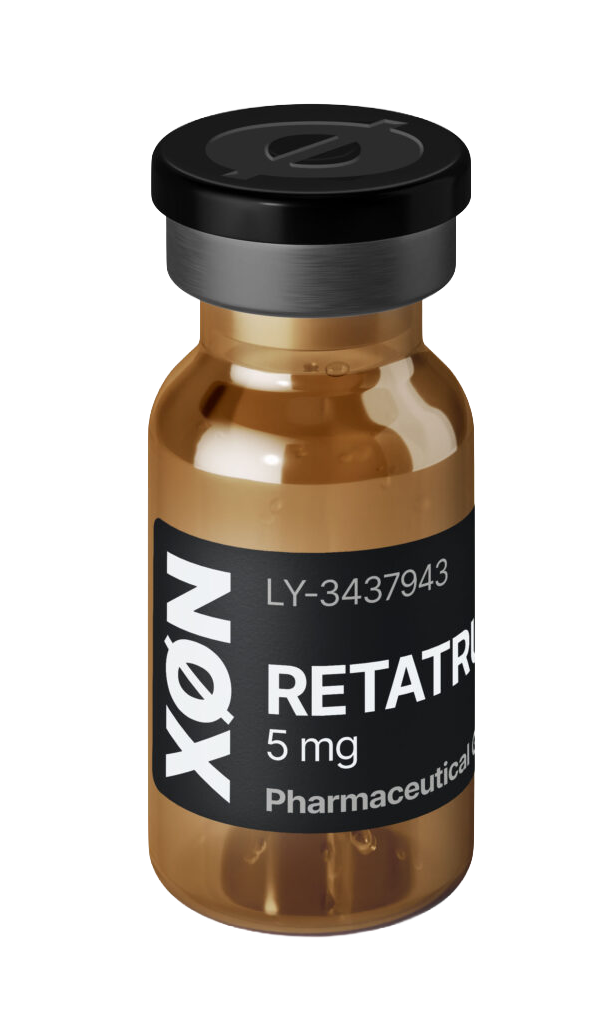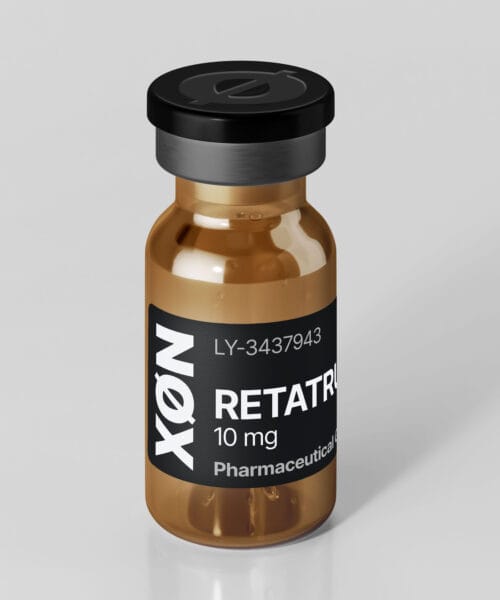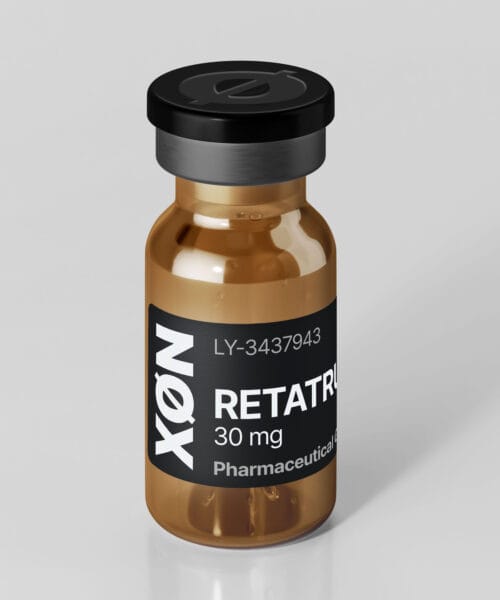

If you’ve seen “reta peptide” mentioned alongside Ozempic, Wegovy, or Mounjaro, the excitement is understandable. Retatrutide produced striking weight-loss results in an early obesity trial, earning attention as a potential next-generation metabolic medicine. But there’s a catch that social media posts and peptide storefronts often blur: retatrutide remains an investigational drug, not an FDA-approved treatment.
This evidence-based review explains what reta peptide is, how its three-receptor mechanism differs from semaglutide and tirzepatide, and what human trials actually show. You’ll also learn about known side effects, unresolved safety questions, legality, and the limits of certificates supplied with research-grade material.
The scope matters. This article reviews published clinical research and laboratory quality principles: it does not provide dosing, reconstitution, or self-injection instructions. Products labeled “research use only” aren’t substitutes for regulated prescriptions, even when a seller posts an impressive-looking purity number.
Retatrutide may eventually become an important obesity and type 2 diabetes therapy. For now, though, the smartest approach is neither breathless hype nor automatic dismissal. It’s careful reading, with one eye on the results and the other on what researchers still don’t know.
Key Takeaways
- Retatrutide, or “reta peptide,” is an investigational triple receptor agonist targeting GLP-1, GIP, and glucagon receptors, showing promising weight loss in early human trials but is not FDA-approved.
- Clinical studies reveal significant weight loss with retatrutide, but gastrointestinal side effects are common and medical supervision is essential due to its investigational status.
- Retatrutide differs from FDA-approved drugs like semaglutide and tirzepatide by activating an additional glucagon receptor, potentially increasing energy expenditure but also raising safety questions.
- Products labeled as “reta peptide” or “research use only” are not regulated treatments and may lack proper potency, sterility, and safety for human use outside clinical trials.
- Verification of research-grade reta peptide through Certificates of Analysis and accredited testing labs is critical, but such certificates alone do not guarantee clinical safety or FDA approval.
- Until more data are available and retatrutide gains regulatory approval, patients should consult healthcare providers for approved obesity and diabetes therapies rather than using unregulated reta peptide products.
What is reta peptide (retatrutide)?
Retatrutide is an experimental, long-acting peptide drug developed by Eli Lilly. It activates three hormone receptors involved in appetite, glucose regulation, and energy metabolism: glucagon-like peptide-1 (GLP-1), glucose-dependent insulinotropic polypeptide (GIP), and glucagon receptors.
It’s administered once weekly in clinical research, but that doesn’t make unapproved reta peptide appropriate for personal use. The formulation, storage history, dose accuracy, sterility, and medical monitoring used in a controlled trial can differ dramatically from what you encounter online.
– Names and terminology: retatrutide vs “RETA” vs “reta peptide”
Retatrutide is the recognized nonproprietary drug name used in trial registries and scientific publications. “RETA” is an informal abbreviation, while “reta peptide” is largely a search term or marketplace label. They usually refer to the same intended molecule, but labels alone don’t prove that a vial contains authentic retatrutide.
Retatrutide has also appeared under Lilly’s development code LY3437943. That code can help you locate early studies, although you should distinguish the characterized investigational product from an anonymously manufactured powder using its name.
– What it’s being studied for (obesity, T2DM, cardiometabolic risk)
The central research targets are obesity and type 2 diabetes mellitus (T2DM). Trials examine changes in body weight, glycated hemoglobin, fasting glucose, waist circumference, blood pressure, lipids, and liver-related measurements.
Researchers are also studying broader cardiometabolic applications, including obstructive sleep apnea, osteoarthritis associated with obesity, and metabolic dysfunction-associated steatotic liver disease. Improved risk markers are promising, but they aren’t automatically proof that a drug prevents heart attacks or extends life. Those clinical outcomes require appropriately designed, longer-term studies.
How reta peptide works: triple receptor agonism (GLP-1 + GIP + glucagon)
Retatrutide is often called a triple agonist because one molecule activates GLP-1, GIP, and glucagon receptors. That combination is intended to reduce food intake while improving glucose handling and potentially increasing energy expenditure.
Think of it less like three separate switches and more like a mixing board: turning one channel up changes how the others sound. The glucagon component is particularly important because glucagon can raise blood glucose, yet its effects may be counterbalanced by GLP-1 and GIP activity. The therapeutic question is whether that balance delivers greater benefit without unacceptable risk.
– GLP-1 pathway: satiety, gastric emptying, glucose control
GLP-1 receptor activation strengthens glucose-dependent insulin secretion, suppresses inappropriate glucagon release, slows gastric emptying, especially early in treatment, and influences appetite centers in the brain. In practical terms, you may feel full sooner and remain satisfied longer.
These same actions help explain common gastrointestinal problems. Nausea, fullness, reflux, diarrhea, constipation, or vomiting can appear as treatment starts or a trial dose increases. Gastric emptying effects may also matter before anesthesia or when someone takes medicines whose absorption depends on timing.
– GIP pathway: insulinotropic effects and metabolic signaling
GIP is an incretin hormone released after eating. When glucose is elevated, GIP receptor activation can support insulin secretion. Its wider signaling involves adipose tissue and metabolic regulation, although the exact contribution of GIP agonism to weight loss remains actively investigated.
GIP was once viewed as an odd target for obesity because natural GIP biology is complicated. Tirzepatide changed that conversation: combining GIP and GLP-1 receptor agonism produced substantial glucose and weight effects. Retatrutide builds on the idea by adding calibrated glucagon receptor activity.
– Glucagon pathway: energy expenditure, hepatic effects, and why balance matters
Glucagon signals the liver to release glucose and can influence fat oxidation, amino-acid metabolism, and energy expenditure. That creates both the appeal and the tension. More energy use could support weight reduction, but excessive glucagon signaling might worsen glucose control or increase other metabolic burdens.
Retatrutide’s GLP-1 and GIP activity is designed to offset glucagon’s glucose-raising tendency. Early results suggest the combined mechanism can lower glucose overall. Still, dose balance matters, and laboratory findings can’t replace long-term evidence on cardiovascular, hepatic, and pancreatic outcomes.
Clinical evidence summary: what human trials show so far
Human data are encouraging but still incomplete. Early trials establish signals, not final certainty about long-term effectiveness or uncommon harms. Published retatrutide studies have generally been randomized and controlled, which is a strong foundation, but Phase 2 populations are smaller and follow-up is shorter than what you’d want for a medicine potentially taken for years.
The headline result is substantial average weight loss at higher trial doses. The less glamorous details matter too: gradual dose escalation, gastrointestinal discontinuations, selected participants, and continued lifestyle counseling.
– Phase 1 overview: early safety/tolerability and pharmacology signals
Early studies evaluated pharmacokinetics, dose response, glucose effects, body weight, and tolerability in adults with type 2 diabetes. Retatrutide’s half-life supported weekly administration, while escalating exposure produced encouraging reductions in glucose and weight.
Phase 1 trials are deliberately small and closely supervised. They can identify common short-term reactions and guide dose selection, but they’re poorly equipped to reveal rare events. In other words, Phase 1 tells researchers whether development should continue, not whether you should buy a vial from someone whose customer support is a Telegram handle.
– Phase 2 obesity trial highlights: weight loss, cardiometabolic markers, patient-reported outcomes
In the 2023 Phase 2 obesity study published in The New England Journal of Medicine, participants without diabetes receiving 12 mg lost an average 24.2% of baseline body weight at 48 weeks, compared with 2.1% on placebo. At that dose, 26% achieved at least 30% weight loss.¹
Several cardiometabolic measures, including waist circumference, blood pressure, glucose, and lipids, also improved. Yet averages hide variation: not everyone responded equally, and gastrointestinal events were common. Some patient-reported physical-function measures improved, but durability beyond the study period remains uncertain.
– What to watch in Phase 3 programs: endpoints, timelines, and open questions
Lilly’s TRIUMPH Phase 3 program is examining retatrutide across obesity and related conditions. Watch for at least 72-week weight outcomes, discontinuation rates, maintenance after treatment changes, and results among people with diabetes, who often lose less weight than participants without diabetes.
Other key questions include:
- Does retatrutide reduce major cardiovascular events?
- How does lean mass change alongside fat mass?
- What happens after discontinuation?
- Are liver, kidney, or sleep-apnea benefits clinically meaningful?
- Do uncommon harms emerge in larger populations?
Trial completion dates can change, so verify individual studies through ClinicalTrials.gov.
Retatrutide vs semaglutide vs tirzepatide: key differences
These drugs overlap, but they aren’t interchangeable. Semaglutide has extensive regulatory and real-world experience: tirzepatide adds dual-receptor activity: retatrutide adds a third target but remains experimental.
| Drug | Receptor mechanism | Selected US obesity brand/status |
| Semaglutide | GLP-1 agonist | Wegovy: FDA-approved |
| Tirzepatide | GIP + GLP-1 agonist | Zepbound: FDA-approved |
| Retatrutide | GIP + GLP-1 + glucagon agonist | Investigational: no approved brand |
Approved products have standardized manufacturing, prescribing information, and post-market surveillance. Retatrutide doesn’t yet have that complete evidence-and-oversight package.
– Mechanism comparison (single vs dual vs triple agonism)
Semaglutide activates the GLP-1 receptor. Tirzepatide activates GIP and GLP-1 receptors. Retatrutide targets both plus the glucagon receptor. Calling these “single,” “dual,” and “triple” agonists is useful shorthand, but receptor count isn’t a league table where three automatically beats two.
Potency, receptor bias, exposure, tolerability, adherence, and dose all influence results. A more complicated mechanism can create added efficacy, added risk, or both. Only direct comparative trials can determine which option performs better for a particular population.
– Efficacy and limitations: interpreting cross-trial comparisons responsibly
The numbers tempt easy comparisons:
| Study | Population and duration | Mean weight change at selected high dose |
| STEP 1, semaglutide 2.4 mg | Obesity/overweight, no diabetes: 68 weeks | −14.9% |
| SURMOUNT-1, tirzepatide 15 mg | Obesity/overweight, no diabetes: 72 weeks | −20.9% |
| Retatrutide Phase 2, 12 mg | Obesity/overweight, no diabetes: 48 weeks | −24.2% |
Those are not head-to-head results. Different enrollment criteria, treatment lengths, estimands, titration schedules, and dropout handling can shift outcomes. Retatrutide’s trajectory had not clearly plateaued at 48 weeks, which is intriguing, but it doesn’t prove superiority over tirzepatide or semaglutide.
Safety, side effects, and risks
Retatrutide’s safety profile isn’t finalized because Phase 3 development and longer follow-up are needed. Published studies show a pattern familiar from incretin-based therapies, mainly gastrointestinal reactions, but glucagon receptor activity introduces questions that require larger datasets.
Risk should also be framed against benefit. For someone with severe obesity and associated disease, effective treatment may materially improve health. For a person pursuing a few cosmetic pounds through an unregulated product, the benefit-risk equation looks very different. Medical history and product provenance both matter.
– Common adverse events (GI effects) and typical onset patterns
The most frequently reported reactions have included nausea, diarrhea, vomiting, constipation, and reduced appetite. Events were generally mild to moderate, occurred most often during dose escalation, and were more common at higher doses or with faster starting schedules in the Phase 2 obesity study.
“Generally manageable” doesn’t mean trivial. Repeated vomiting or diarrhea can cause dehydration, kidney stress, dizziness, and electrolyte abnormalities. Persistent abdominal symptoms deserve clinical assessment rather than another round of internet troubleshooting. Trial participants had protocol-directed monitoring: unsupervised users don’t get that safety net.
– Serious/monitoring considerations (gallbladder, pancreatitis signals, heart rate, thyroid warnings where applicable)
Substantial or rapid weight loss can raise gallstone risk, while severe persistent abdominal pain may require evaluation for pancreatitis or gallbladder disease. Retatrutide trials also observed dose-dependent heart-rate increases, making longer cardiovascular follow-up important.
GLP-1–based approved drugs commonly carry warnings about acute kidney injury from dehydration, severe gastrointestinal disease, hypersensitivity, and aspiration risk around anesthesia. Semaglutide and tirzepatide carry boxed thyroid C-cell tumor warnings based on rodent findings. Retatrutide has no FDA-approved label, so you shouldn’t copy another drug’s label onto it, but related risks and trial exclusion criteria remain clinically relevant.
– Who should avoid use and why (contraindications, pregnancy, comorbidities)
Because retatrutide is investigational, people should not use retail “research” versions at all. Clinical trials apply detailed eligibility rules and medical oversight.
Particular concern applies during pregnancy or breastfeeding, when weight-loss treatment may harm fetal growth or lacks adequate safety evidence. People with a personal or family history of medullary thyroid carcinoma or MEN2, prior pancreatitis, significant gastrointestinal motility disorders, gallbladder disease, unstable cardiovascular conditions, or complex diabetes regimens require specialist evaluation for related therapies. Combining metabolic drugs without supervision can also trigger hypoglycemia, dehydration, or unpredictable interactions.
Regulatory status and legality: is reta peptide FDA-approved?
No. Reta peptide is not FDA-approved. Retatrutide remains an investigational medicine under clinical development, and it doesn’t have an FDA-approved indication, consumer prescribing label, or legitimate commercial brand presentation.
That distinction isn’t paperwork for paperwork’s sake. Approval evaluates evidence for manufacturing consistency, effectiveness, safety, labeling, and quality controls. A molecule can look excellent in Phase 2 and still encounter efficacy, safety, production, or regulatory problems later.
Laws differ outside the United States, but an online seller’s willingness to ship something doesn’t establish that it’s lawful to market, possess, prescribe, or use where you live.
– Investigational status, prescription availability, and why “research use only” matters
Retatrutide generally reaches human participants through authorized clinical trials, not routine prescriptions. You can search recruiting studies using Lilly’s trial resources or ClinicalTrials.gov, then discuss eligibility with a qualified clinician.
“Research use only” (RUO) means a material is offered for laboratory investigation, not human administration. It is not a cheeky legal synonym for “basically medicine.” RUO products haven’t necessarily met standards for injectable sterility, endotoxin control, dose uniformity, stability, or clinical manufacturing. Marketing them with human dosing advice is an especially serious red flag: report questionable products through the FDA reporting portal.
Research-grade reta peptide: COA, purity, and quality checks
A research laboratory may need reference material for validated, institutionally approved work. In that setting, documentation is essential, but no certificate can convert a research chemical into an approved medicine.
A useful quality review asks several distinct questions: Is it the correct molecule? How much is present? What impurities remain? Has the material degraded? Is the container traceable to the tested batch? And if a claimed application requires microbiological controls, were appropriate validated tests actually conducted?
Those questions prevent a common mistake: treating one impressive HPLC percentage as the whole quality story.
– How to read a Certificate of Analysis (identity, purity %, residuals, endotoxin/sterility claims)
A credible Certificate of Analysis should identify the supplier, product, lot or batch number, test date, methods, specifications, actual results, and approving analyst. Match every identifier to the vial and purchase record.
Look for separate evidence covering:
- Identity: mass spectrometry or another suitable orthogonal method
- Purity: chromatographic result with method details and impurity profile
- Content: quantitative assay, not merely peak-area purity
- Residuals: water, solvents, counterions, or related impurities where relevant
- Microbiology: validated endotoxin and sterility tests if genuinely claimed
A “99% purity” result doesn’t mean the vial contains the advertised total mass, or that it is sterile.
– Third-party testing, batch documentation, and common red flags
Independent testing is most persuasive when the laboratory is identifiable, appropriately accredited for the methods used, and able to confirm the report directly. A vendor-hosted PDF can be altered, reused across lots, or detached from the physical sample.
Watch for mismatched lot numbers, cropped chromatograms, no raw data, impossible test dates, generic signatures, spelling errors in the chemical name, and reports lacking a method or instrument identifier. QR codes aren’t magic: they may simply open the seller’s own page. For consequential research, arrange authenticated chain-of-custody testing through your institution rather than relying solely on vendor-selected samples.
Storage, stability, and laboratory handling best practices
Peptide stability depends on formulation, physical state, moisture, light, oxygen, temperature, container closure, and freeze-thaw history. There is no universally correct storage rule for every product marketed as reta peptide.
Use the manufacturer’s validated stability documentation, Safety Data Sheet, institutional protocol, and laboratory quality system. If a supplier can’t provide lot-specific instructions or evidence supporting shelf life, don’t improvise. And don’t assume guidance for an approved semaglutide or tirzepatide pen applies to unformulated retatrutide powder: those are different products with different excipients and packaging.
– Shipping and receiving: temperature exposure and inspection checklist
On receipt, trained laboratory personnel should document the shipment before placing it into controlled storage. A simple institutional checklist includes:
- Confirm sender, purchase authorization, and chain of custody.
- Photograph packaging and record arrival time.
- Review any temperature indicator or data logger.
- Inspect for broken seals, moisture, leakage, discoloration, or damaged containers.
- Match product and lot numbers against the COA and order.
- Quarantine discrepancies pending supplier investigation.
A cool package doesn’t prove uninterrupted temperature control. If validated shipping limits were exceeded, record the excursion and obtain a documented disposition.
– Short-term vs long-term storage conditions and labeling/traceability
Follow product-specific validated conditions rather than a forum post. Long-term storage commonly demands tighter temperature, moisture, and light controls than short-term analytical handling, but exact limits must come from supporting stability data.
Label records should preserve product identity, supplier, lot number, received and opened dates, storage location, responsible researcher, and expiration or retest date. Maintain access logs and inventory reconciliation. Minimize unnecessary environmental exposure and repeated temperature cycling under your approved protocol. Once integrity or traceability is lost, the safest scientific choice is usually to quarantine the material, not “see if it still looks fine.”
Frequently asked questions about reta peptide
Reta peptide attracts unusually mixed search intent: some people want clinical-trial information, others are comparing future obesity medicines, and some have already found gray-market vials. These concise answers keep the crucial boundaries clear.
The bottom line is reassuring, even if it isn’t flashy: you don’t need to gamble on an unapproved injectable to pursue evidence-based obesity care. FDA-approved options and legitimate clinical trials provide medical screening, traceable products, and adverse-event monitoring, boring safeguards right up until you need them.
– Is reta peptide the same as retatrutide?
Usually, yes. “Reta peptide” and “RETA” are informal terms used for retatrutide, also known in development as LY3437943. But, a seller’s label doesn’t establish chemical identity, concentration, purity, or authenticity.
When reading evidence, search for retatrutide in peer-reviewed journals and trial registries. When assessing laboratory material, verify identity using appropriate analytical methods and lot-specific documentation. The distinction is simple: the names may point to the same intended molecule, while the products bearing those names may not be equivalent at all.
– What does “once-weekly injectable” mean in clinical studies?
It means trial participants receive a protocol-defined subcutaneous administration once every seven days, generally after screening, randomization, and supervised dose escalation. Researchers track adherence, symptoms, vital signs, laboratory values, and predefined adverse events.
It does not mean any retatrutide-labeled vial can safely be injected weekly. Clinical supplies have controlled formulation, concentration, manufacturing, and accountability. Published trial schedules are also descriptions of research, not personalized instructions. If you’re interested in participation, contact an authorized study site rather than attempting to replicate its protocol yourself.
– Can reta peptide be used in humans?
Retatrutide is being administered to eligible human participants in authorized clinical trials. It is not approved for routine human use, and research-grade reta peptide shouldn’t be injected, ingested, compounded casually, or used as a substitute for prescribed treatment.
If your goal is weight management or diabetes care, speak with a licensed clinician about approved options such as Wegovy, Zepbound, Ozempic, or Mounjaro where medically appropriate. If your goal is contributing to retatrutide research, use an official trial registry. Either path is safer than letting an anonymous marketplace become your pharmacy.
– How do I verify a vendor COA and lot number?
Start by matching the COA’s product code, lot number, dates, and quantity to the unopened container. Then contact the named testing laboratory through independently sourced details, not the phone number printed only on the PDF, and ask whether it issued that report.
Request complete methods, specifications, chromatograms, spectra, quantitative assay data, and sample chain-of-custody records. Confirm whether testing was performed on your production lot or a hand-selected sample. If independent institutional testing disagrees, quarantine the batch and investigate.
Eventually, COA verification supports legitimate laboratory work: it does not establish FDA approval or human-use suitability. Reta peptide remains scientifically compelling, but patience and regulated evidence are the smart prescription for now.